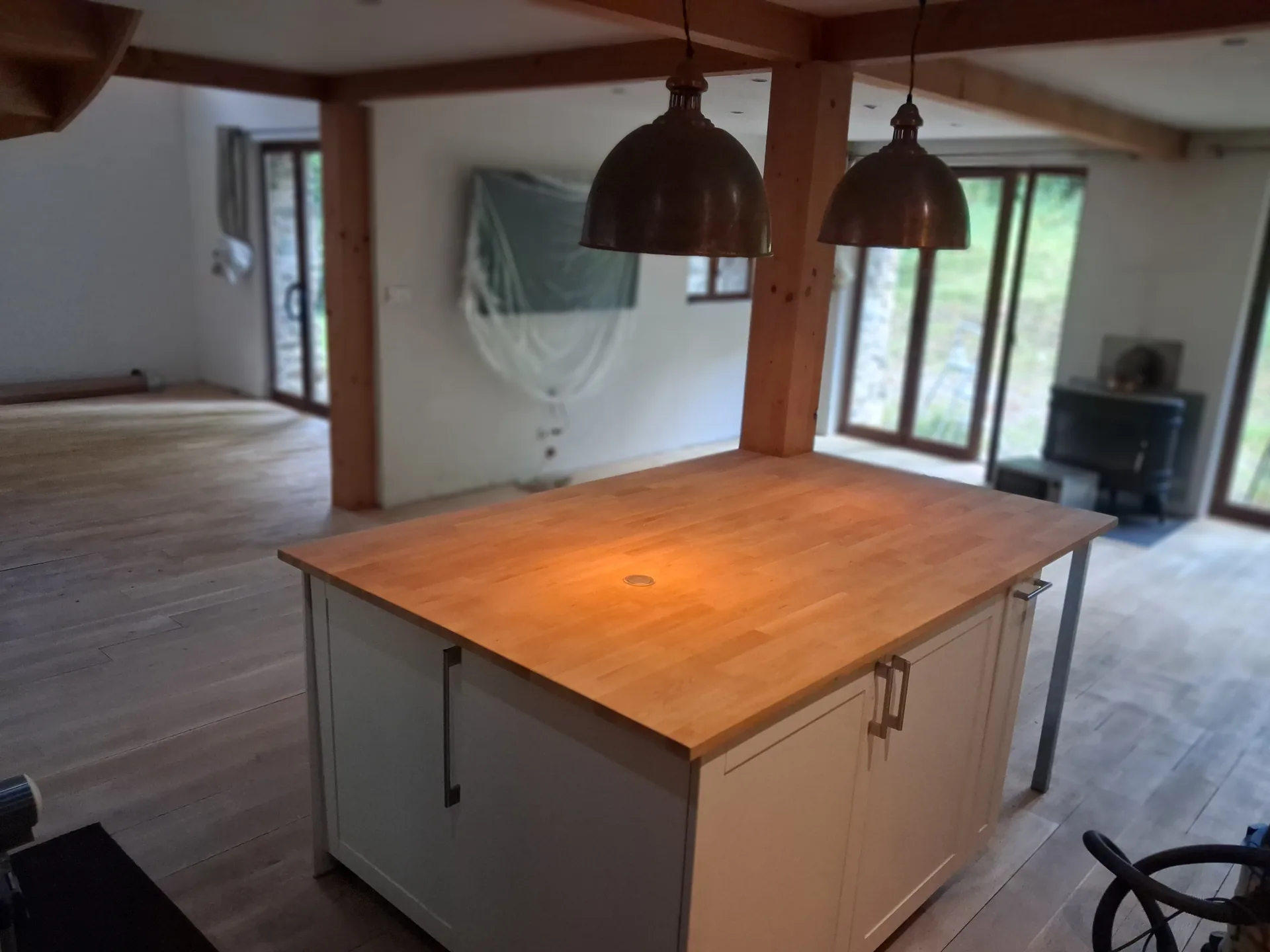
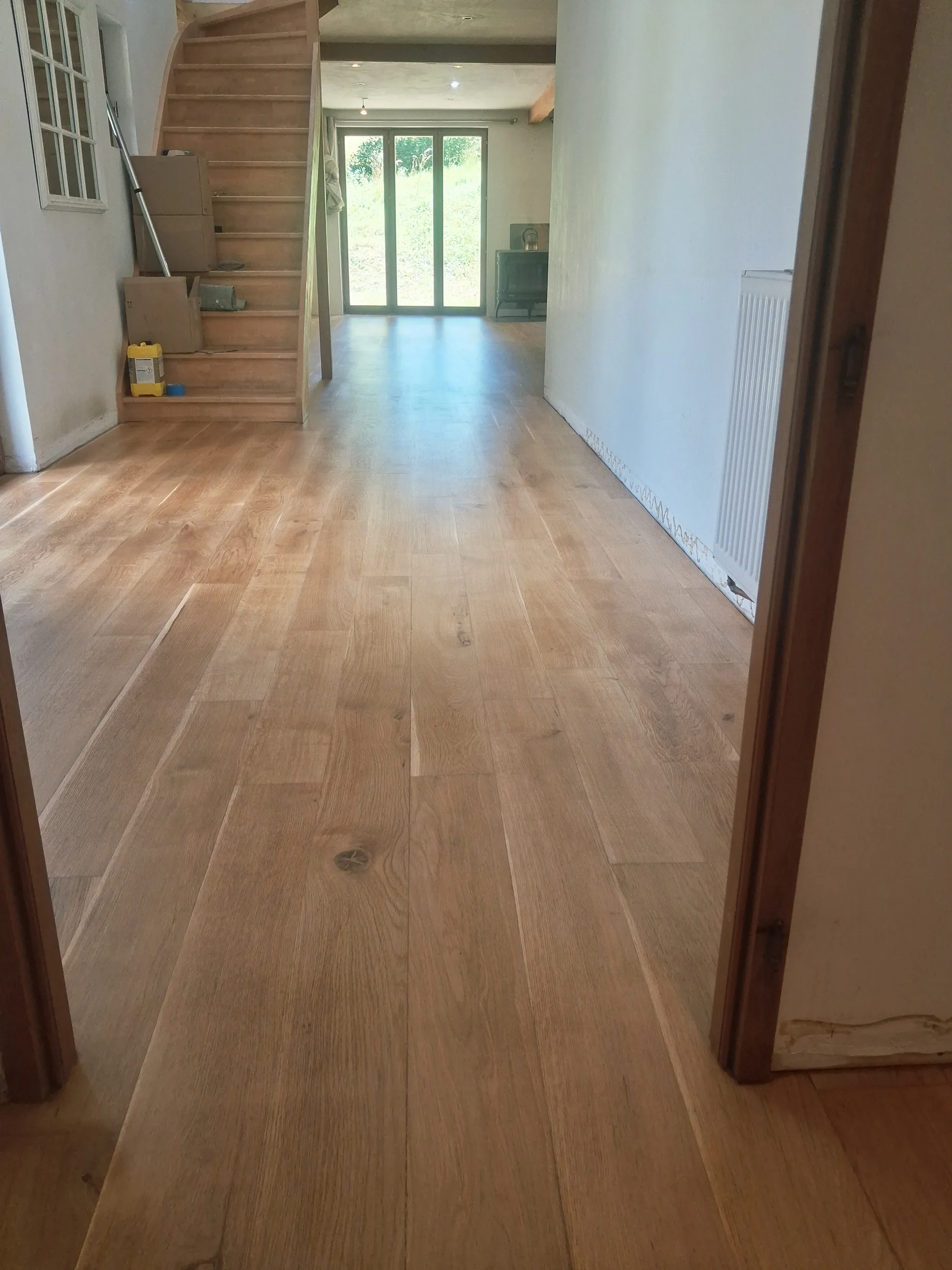
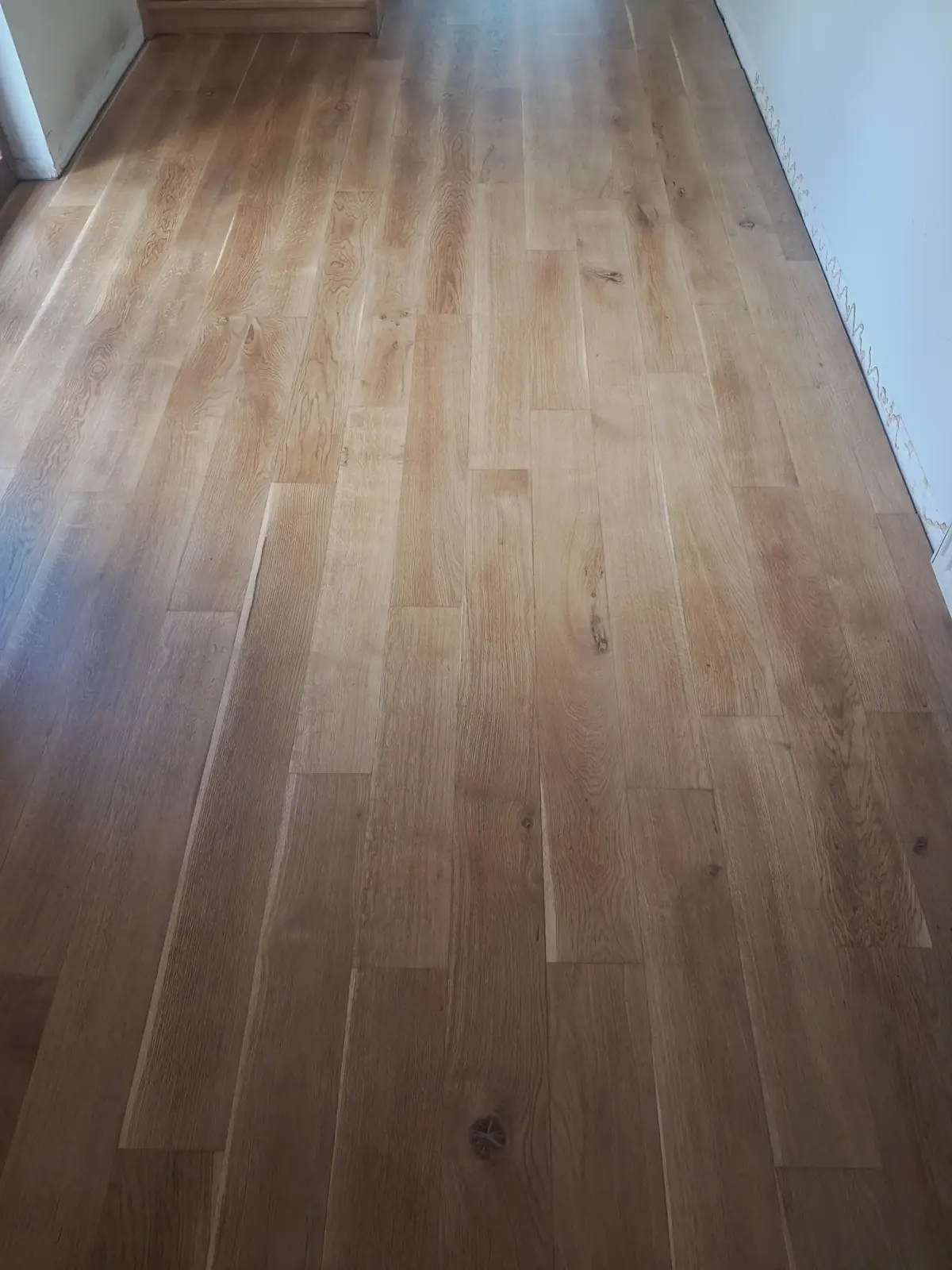
The oak floor of a Campan barn, set free then brought back to new
The project at a glance
- The challenge
- Around 90 m² in poor condition, to restore before the owners moved in
- The cause
- A constrained floor: spacers left in place, no expansion gap anywhere
- The method
- Sanding back to bare wood, sawdust-tinted filling, hard sealer, extra matt lacquer
- The result
- Oak free to move again, good for years to come
A floor that had never been allowed to live
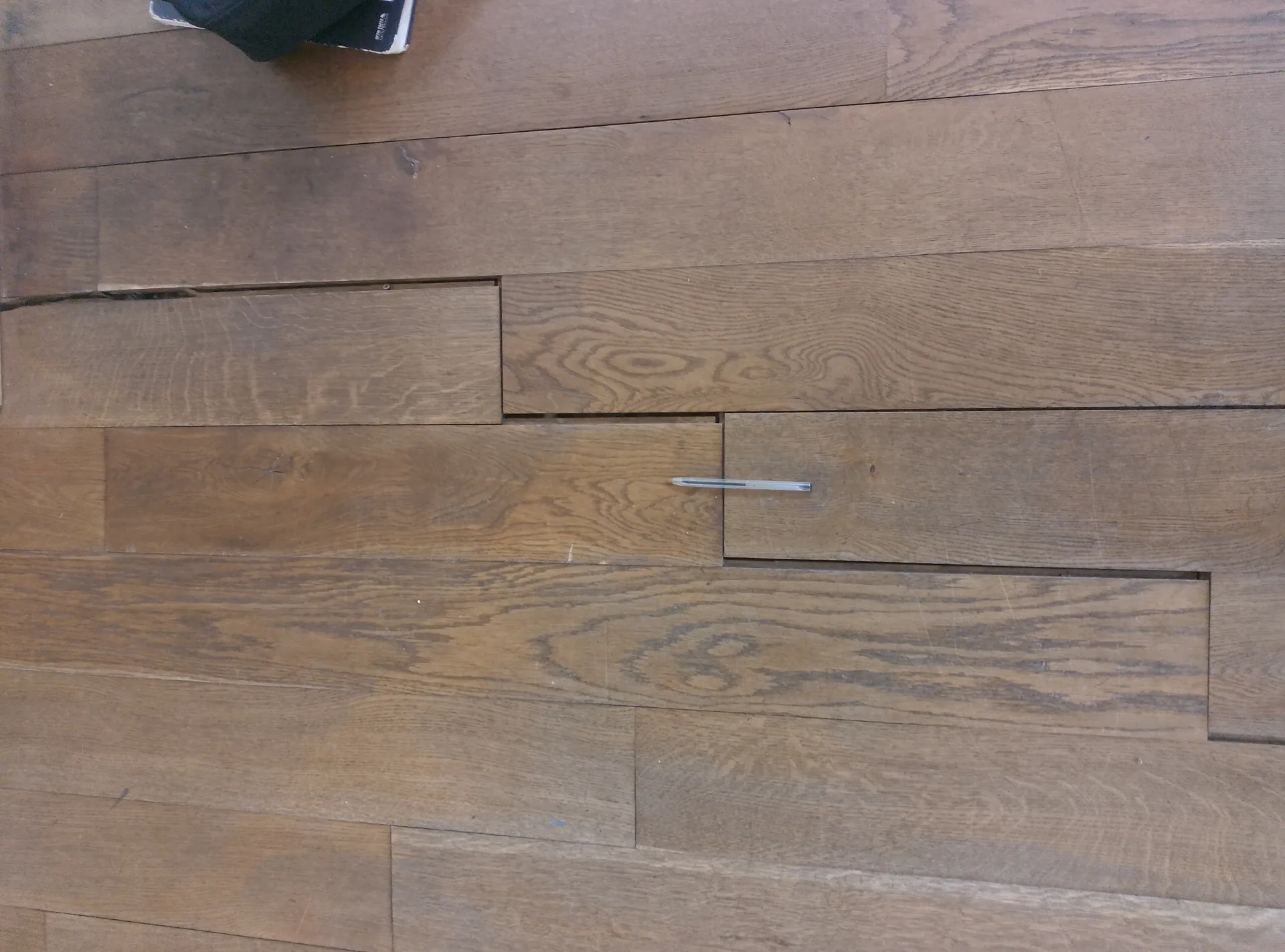
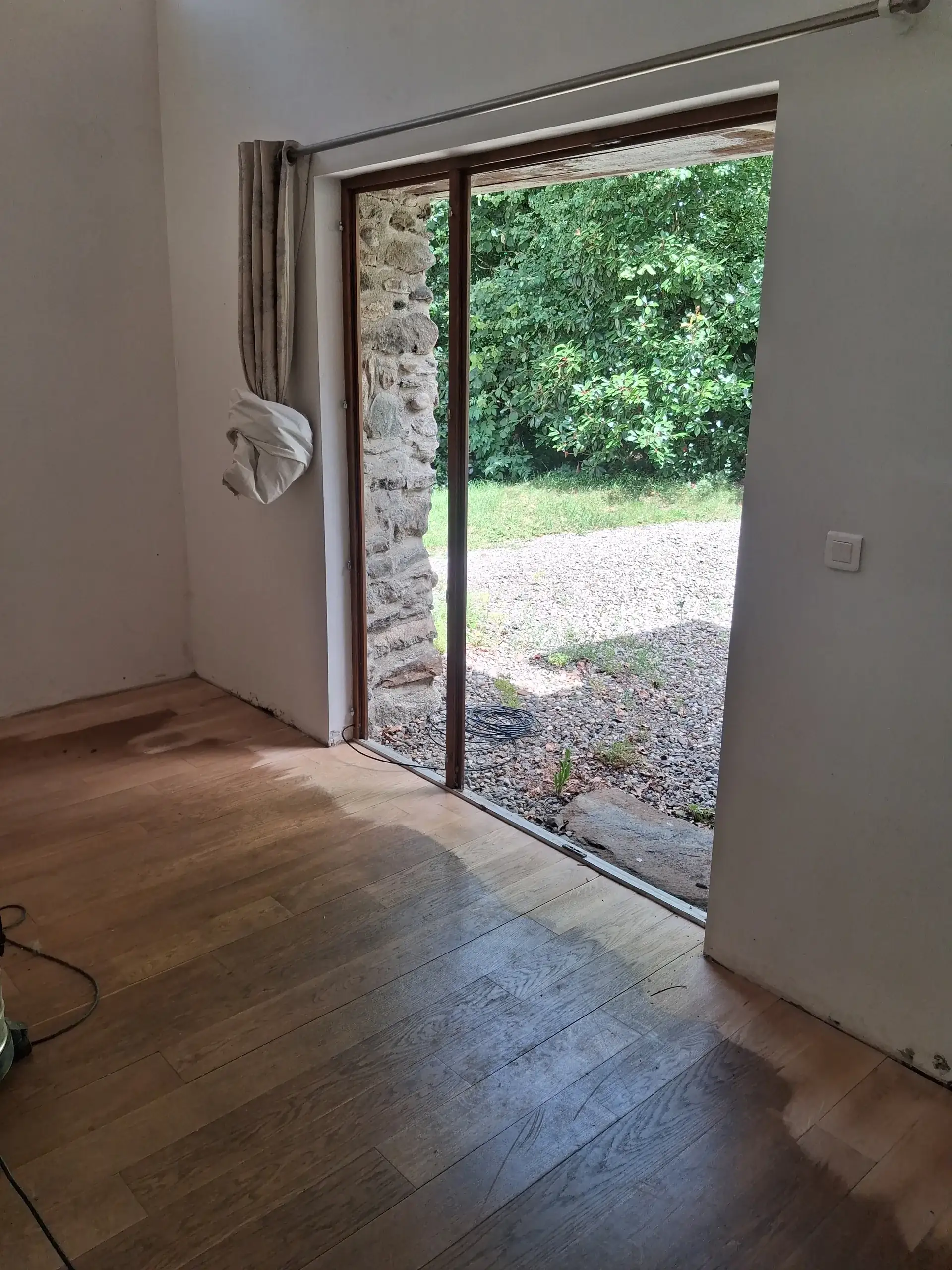
A couple taking over a Pyrenean barn called me about their ground floor: around 90 m² of solid oak flooring on battens, in poor condition, with a fixed moving-in date. The diagnosis was clear. This floor had moved badly over the years because it had never been allowed to live: the fitting spacers had been left in place around the whole perimeter, and there was no at all, despite some considerable widths to cover. The wood, constrained on every side, had ended up opening deep cracks. On top of that, an unsuitable, far too fragile finish marked at the slightest drop of water and had turned grey in places.
Treat the cause first: give the wood its freedom back
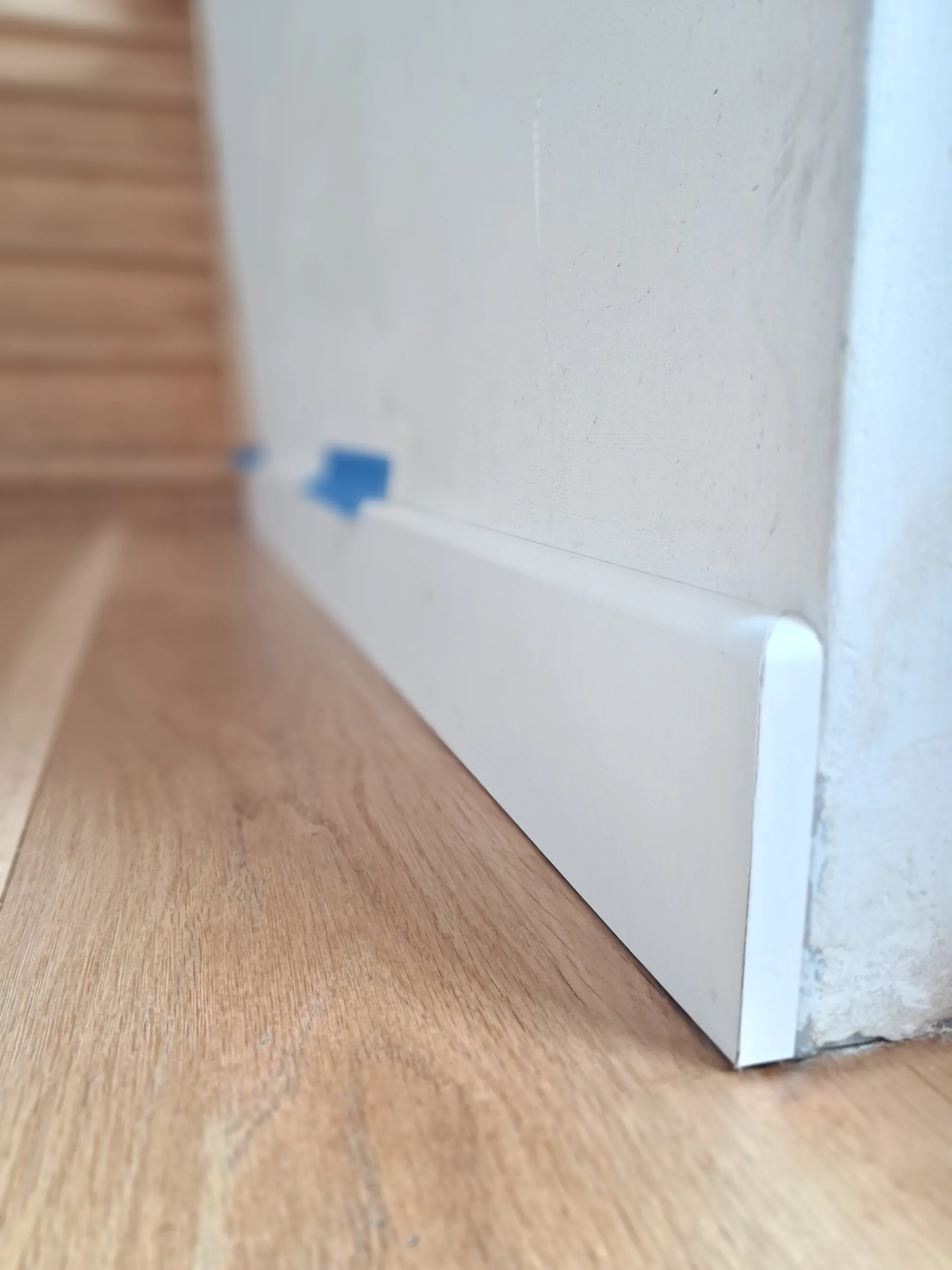
Sanding a cracked floor without treating the cause is like repainting a wall that lets the water in. So we started by removing the existing skirting boards and taking out every spacer around the perimeter, to give the floor back its freedom of movement. Where it was needed, I created an expansion gap, filled with a sealant tinted to match the floor: to the eye, it is almost invisible. At the end of the project, new 14 mm thick skirting boards in pre-painted white MDF replaced the old 8 mm ones, which could not cover a sufficient expansion gap.
Sanding back to bare wood, filling with the floor's own sawdust
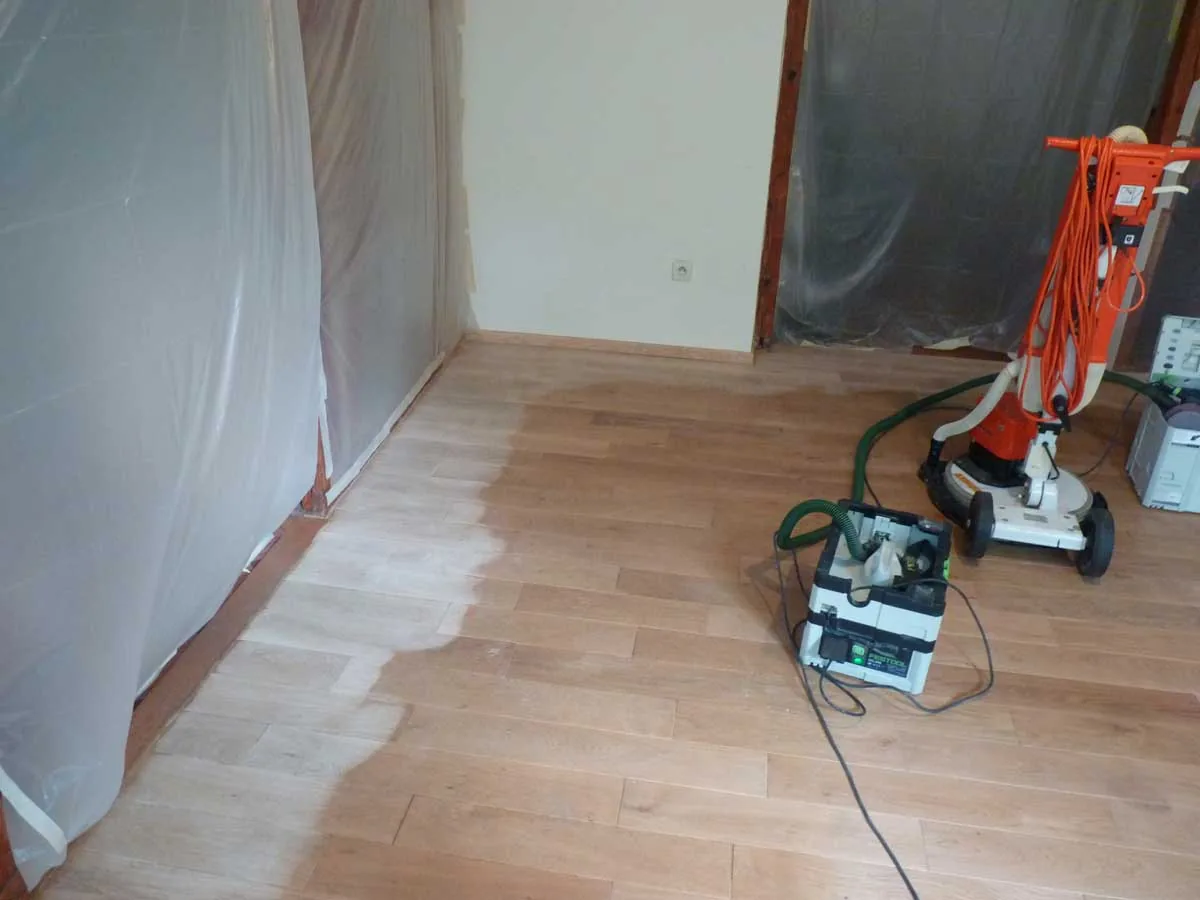
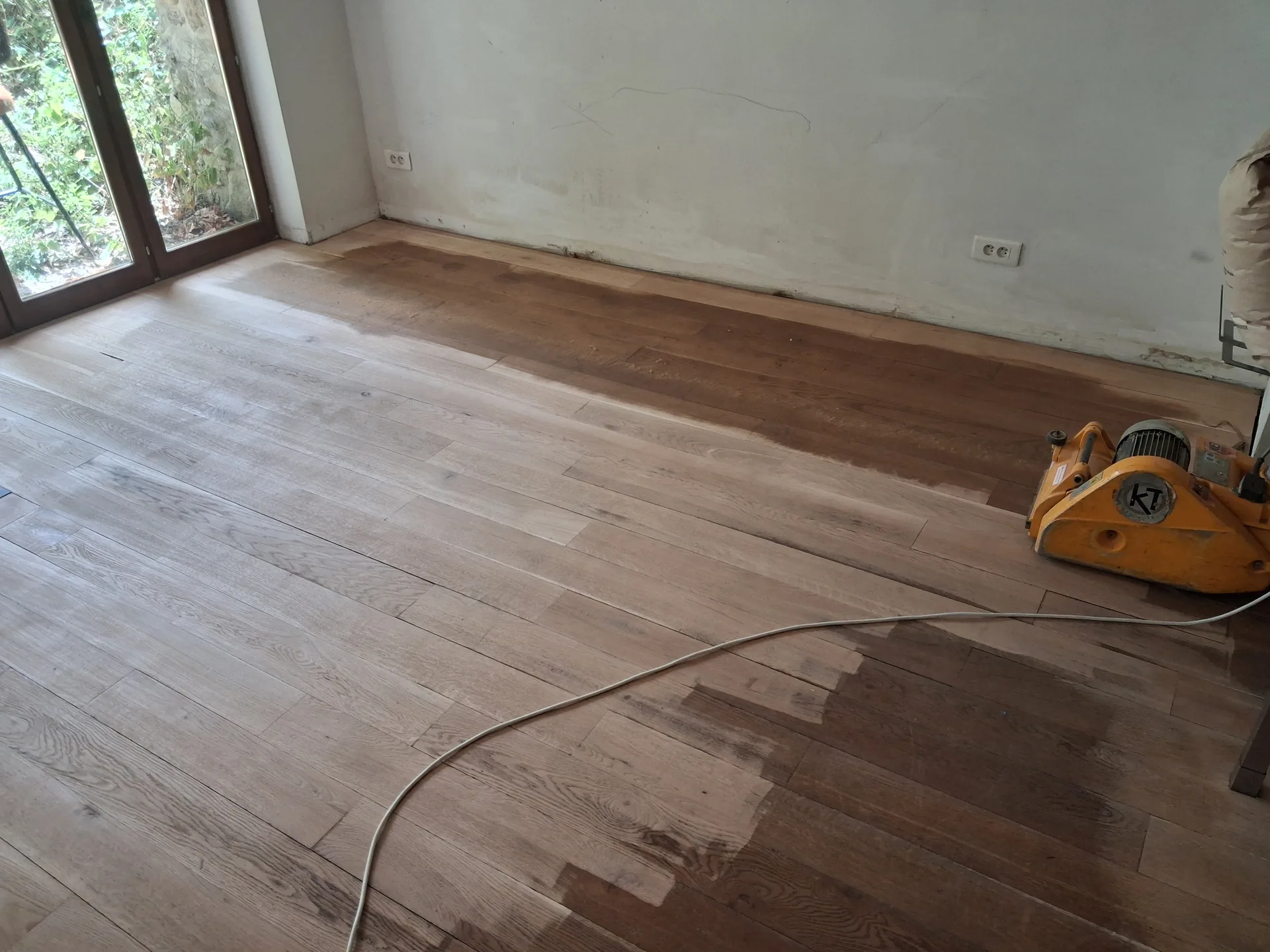
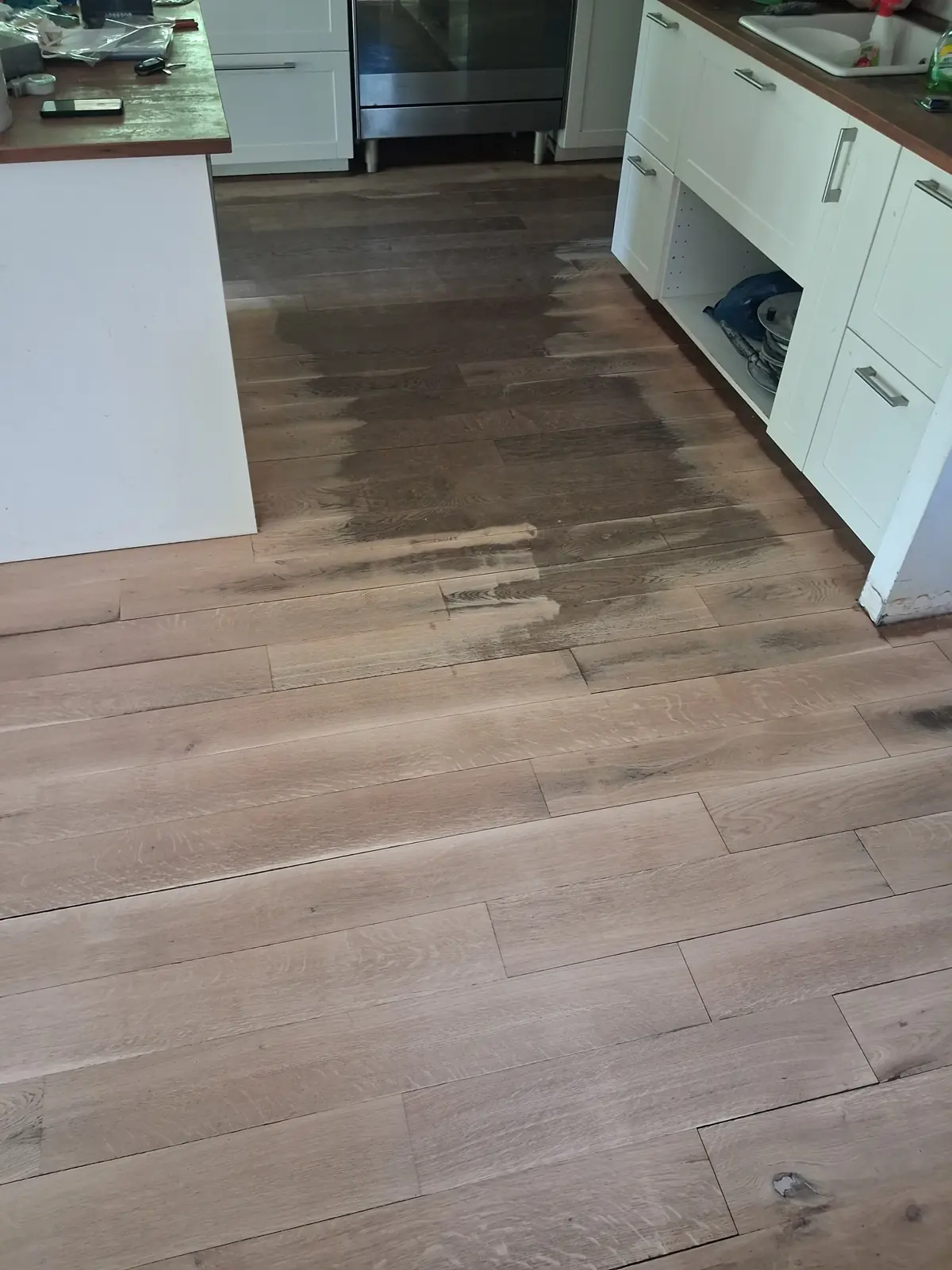
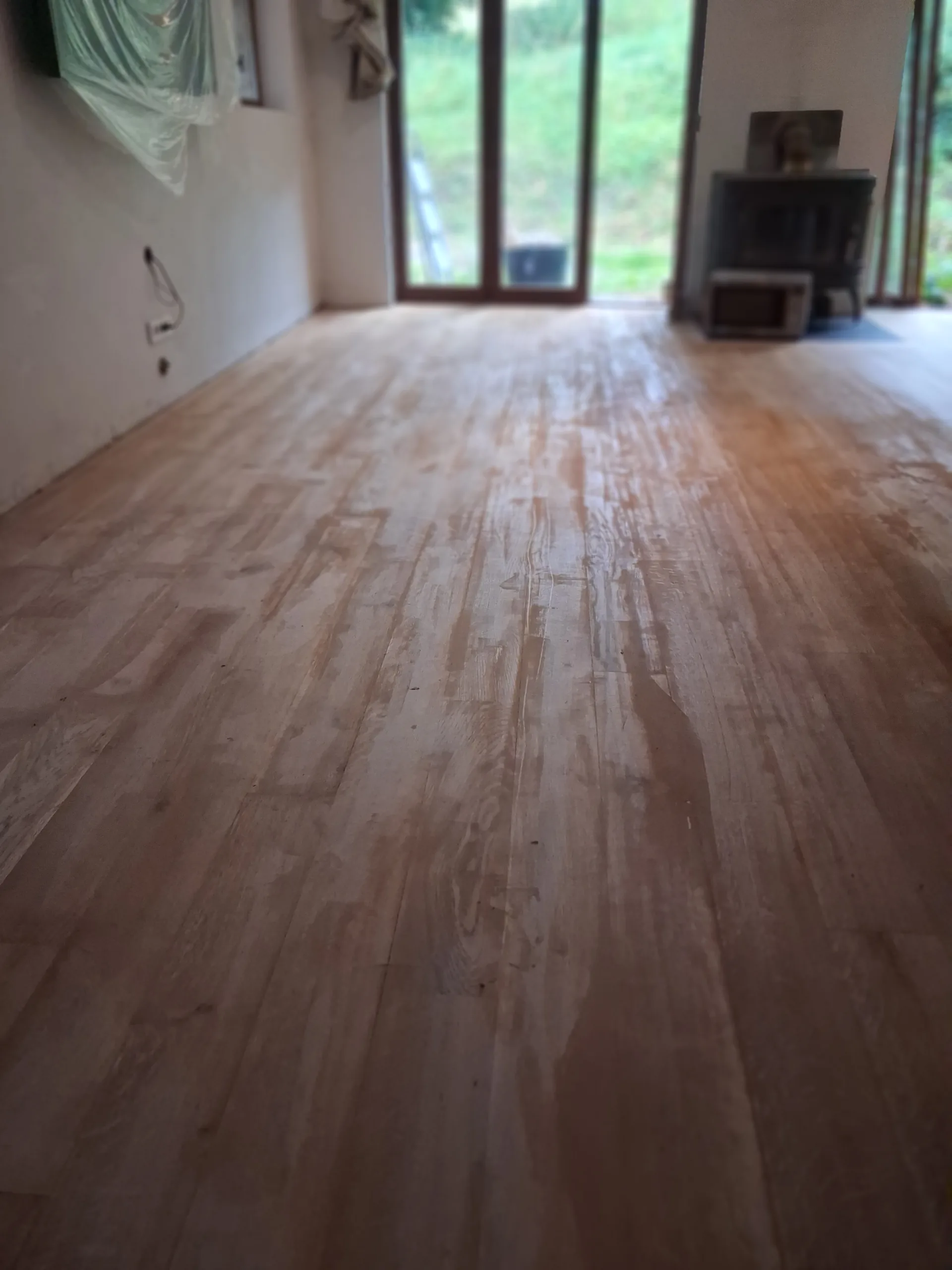
Then the heavy work of the restoration: sanding back to bare wood in two passes, 60 grit then 80 grit. For the deep filling, I mixed a liquid filling binder with sawdust recovered from the floor itself: that is what gives exactly the shade of the wood. Two passes to fill every pore and every crack, then a re-sand at 120 grit over the top. Not a hole left, and repairs that melt into the boards.
An anti-tannin sealer, then a matt finish that lets the oak speak
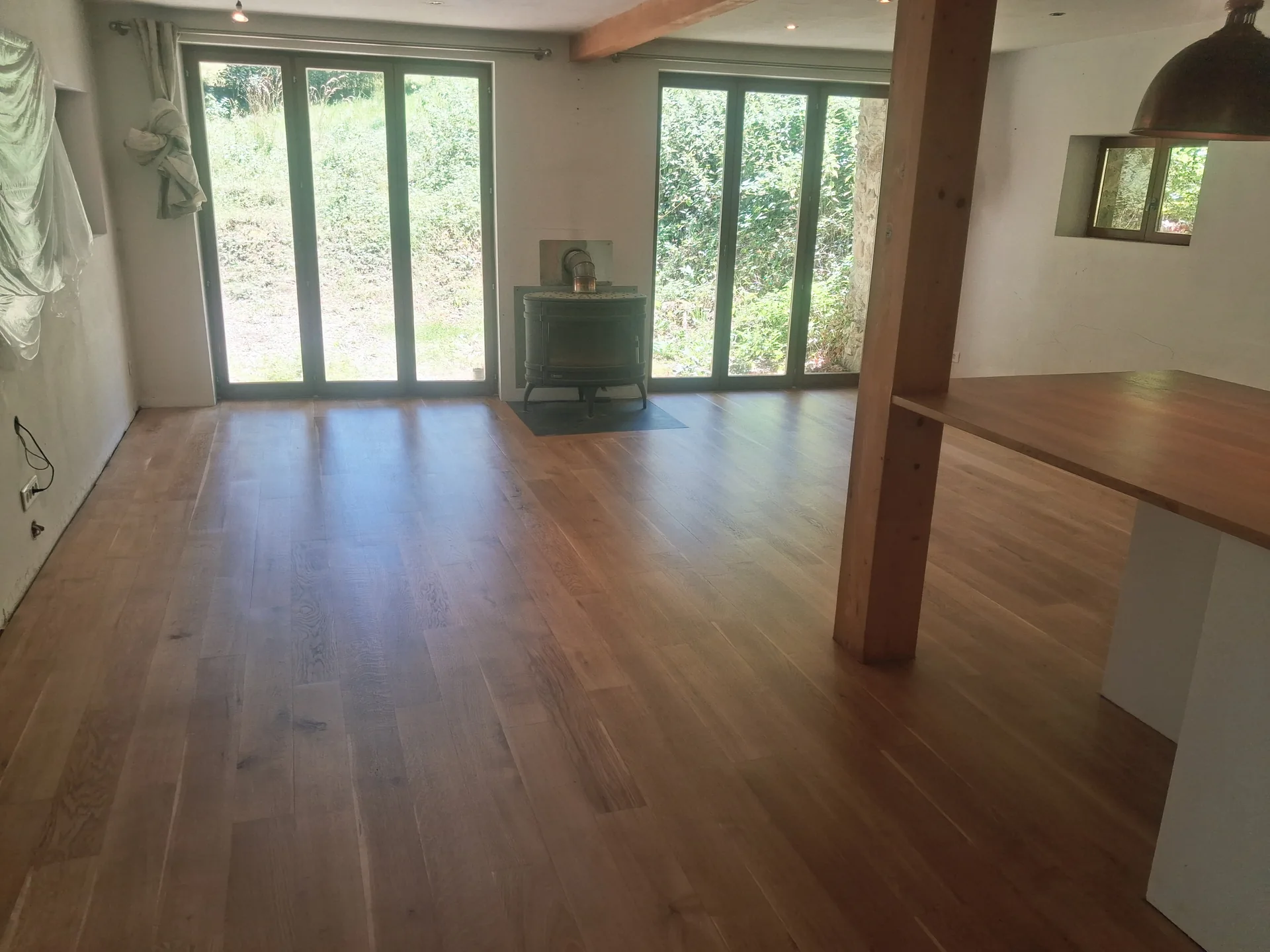
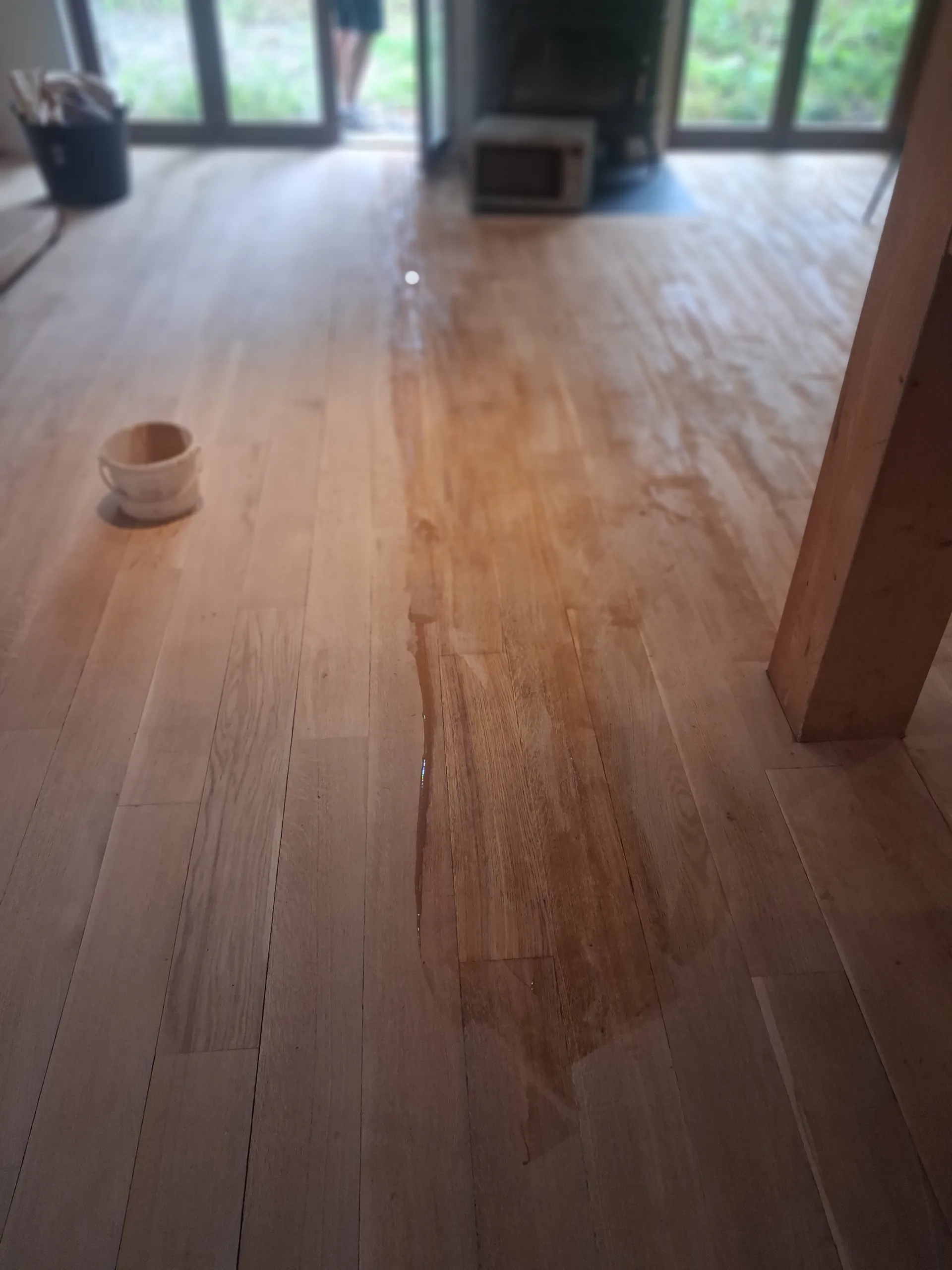
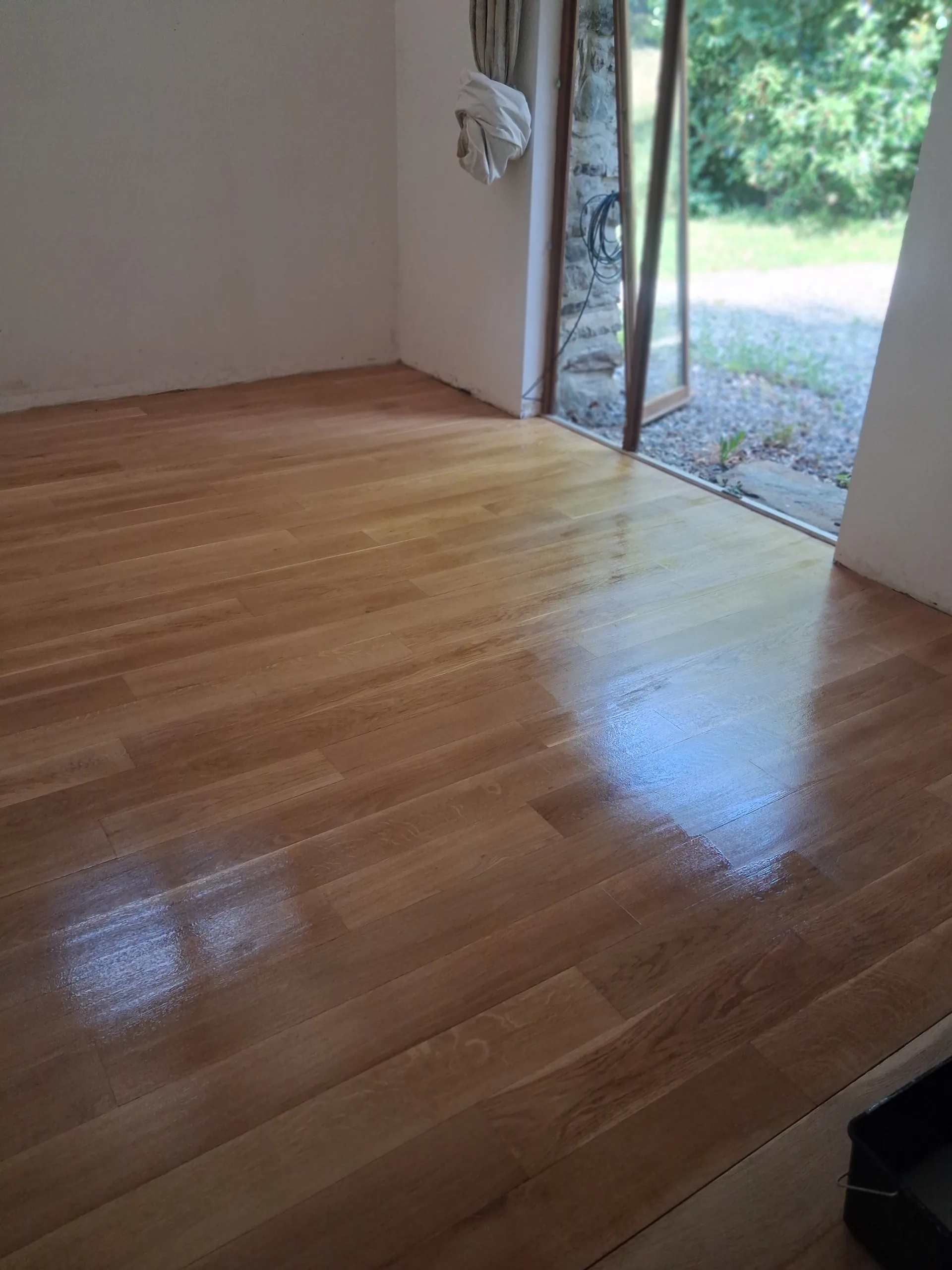
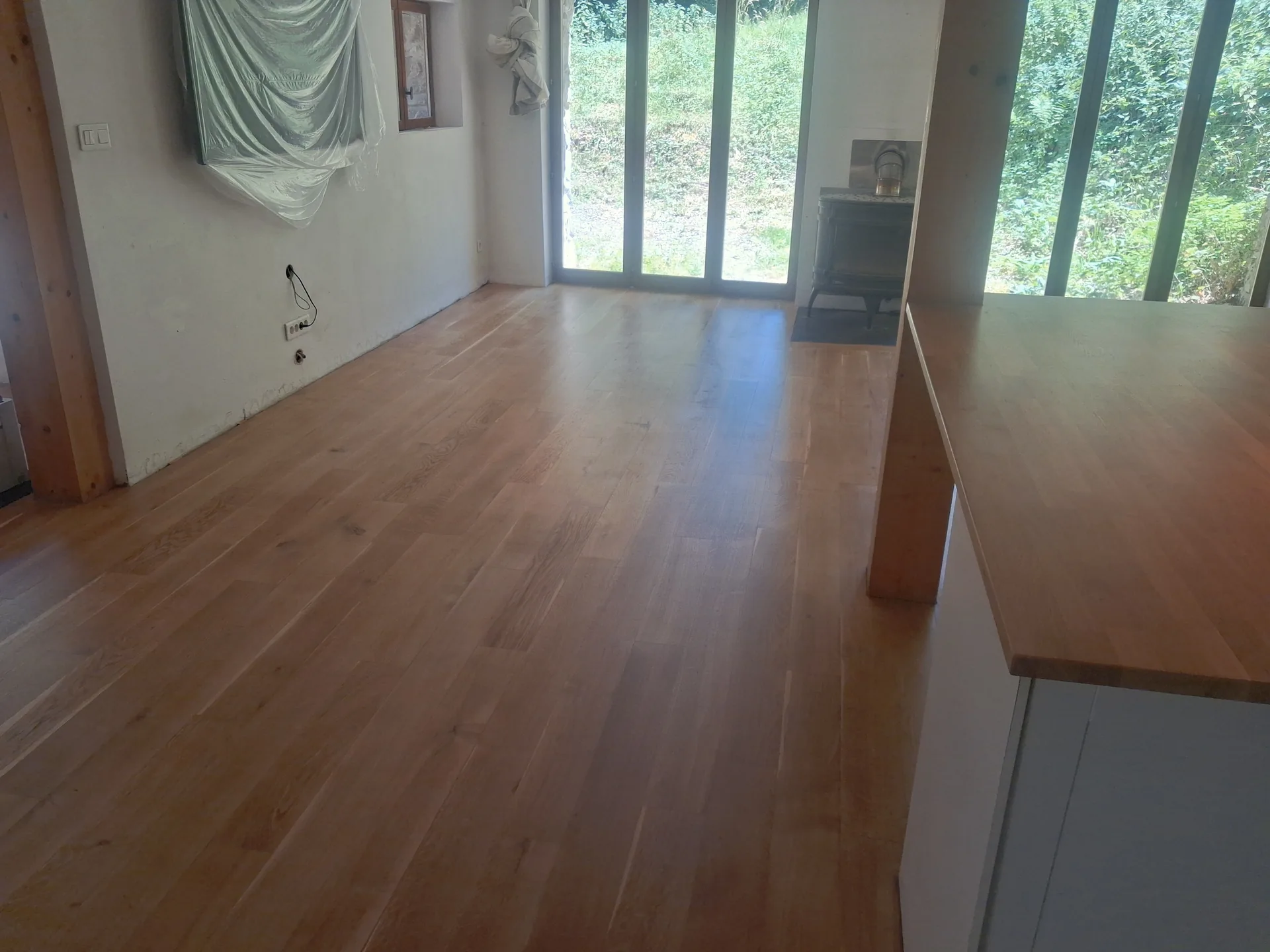
Before the finish, an essential step on oak: a hard anti-tannin sealer coat, the fond dur on a French quote. Oak's rise naturally and disturb the finish if nothing blocks them. Then two coats of extra matt floor lacquer, the vitrificateur of French quotes: the look of raw wood, with the protection of a sealed floor. The job was done as a two-man team with Florent Balzac (FB Agencement), a partner joiner, to hold the deadline on this much surface. The floor went from constrained, cracked, greying oak to a magnificent surface, good for years to come.
This ground floor is part of a wider renovation in the same barn: the kitchen worktops were restored straight after, and the upstairs floor followed, with a challenge all of its own. Two more projects to discover here.
"A huge thank you to Tom Klein! We are delighted with his work. The result is superb. Hats off to how well he listens. He guided us through our choices all the way through the project. He is a very serious craftsman, deeply involved and passionate about his trade. We recommend him wholeheartedly! We will be turning to Agencement Klein again, that is certain!"
The questions I often get asked
Can a badly cracked wood floor really be saved without replacing it all? Why does a floor turn grey in places? Varnish, oil or wax, how do you choose a finish? How much does a complete restoration cost per m²?
I have practical answers to all of that, and two articles to dig deeper: renovating an old wood floor and varnish, oil or wax your wood floor. For your specific case, call me: the quote is free.
A tired wood floor to save?
Tell me about your floor: its age, its cracks, its creaks. I diagnose the cause before talking about sanding, and I give you a clear price. I speak English, so feel free to call or write in English.
More projects