
Varnish, oil or wax your wood floor: which to choose?
The finish decides everything that awaits you after the job: how the floor looks, what it forgives, and what its upkeep will ask of you for twenty years. Here are the three options, compared frankly.
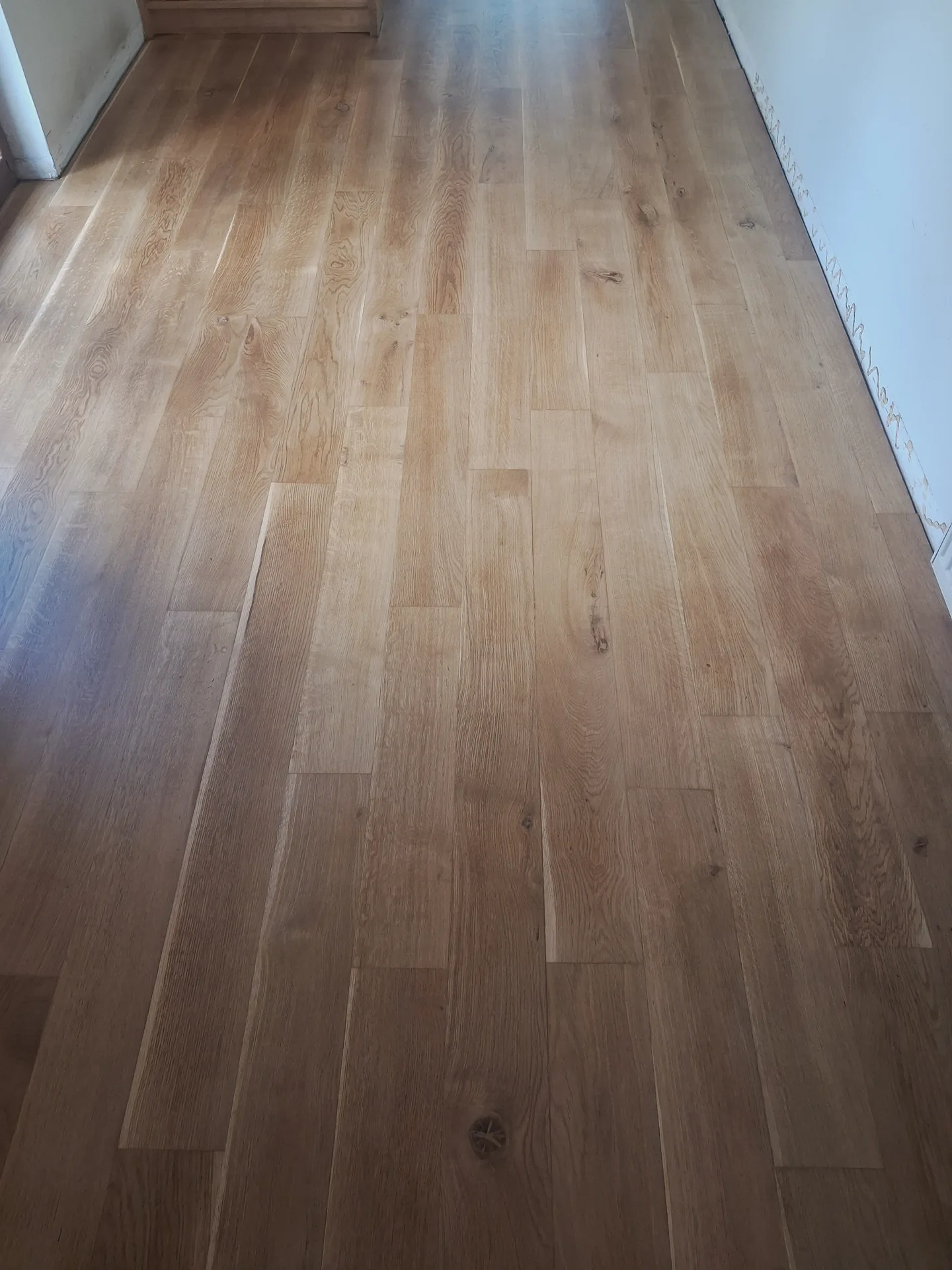
A freshly sanded wood floor is naked and defenceless: one wine stain, one dragged chair, and it is marked. The finish is its protection. Three families exist, and the choice is not just a matter of taste: it is above all a matter of daily life. Are you the type to put on a fresh coat every two years, or to want to forget your floor for ten?
The three finishes head to head
| Criterion | Varnish | Oil | Wax |
|---|---|---|---|
| Look | Surface film, satin to gloss, slightly 'plastic-coated' look | Matt, natural wood, warm to the touch | Traditional patina, smell of wax |
| Upkeep | Next to none for 10 to 15 years | A thin coat every 1 to 3 years in traffic areas | Frequent, and wax clogs the wood over time |
| Repairability | Deep scratch = resand the whole area | Invisible local touch-up, no sanding | Easy touch-up but weak protection |
| Indicative price | €15-30 per m² | €10-25 per m² | €5-15 per m² |
Varnishing: peace of mind, with a trade-off
A lays a protective film on the wood. The result: the floor takes water, stains and traffic without flinching for years. It is the finish I recommend for rental properties, entrance halls and families who never want to hear about upkeep. The trade-off is discovered later: once the film wears through or is deeply scratched, no touch-up is possible. You sand everything off and start again. It is the finish I applied on this renovation of an old wood floor, because the room saw heavy traffic: it was the right tool for that job.
Oil: the one I use on my own pieces
Oil forms no film: it soaks into the wood and protects it from within. The floor stays matt, natural, pleasant under bare feet. Above all, it can be repaired: a scratch, a stain, and I touch up the spot without it showing. No other finish can do that. On furniture and staircases, I use a Swiss based on linseed oil, 100% natural: it is the one you see on my oiled oak staircase. The oil market has come a long way: modern hard oils and hardwax oils have little left in common with our grandparents' pure linseed oil, which demanded constant upkeep.
My honest opinion: furniture and floors have to be kept separate. On a piece of furniture or a staircase, hard oil has every reason to be there: natural, inexpensive, easy to maintain, and it can be touched up locally without showing. On a wood floor, I push the other way: I varnish almost every time, with an extra-matt floor varnish that keeps the natural, unfilmed look of oil, without the plastic-coated effect people hold against the varnishes of the past. Why: an oil evaporates over time, even a hard one, and on a floor it remains less durable than a varnish. And the day a wood floor is redone, you redo the room, rarely one square metre. Add that few people still accept the small marks that make up the life of an oiled floor. Oiling a wood floor remains possible, but it is a choice made with eyes open, and I always warn my clients beforehand.
Wax: the charm, but for whom?
Wax is the historic finish of our old houses: the patina, the smell, the Saturday-morning ritual. I respect it, but I hardly ever recommend it any more. It gives little protection against water and stains, it clogs the wood coat after coat, and it makes the floor slippery: to be ruled out in a kitchen, a bathroom or on a staircase. It keeps its meaning in one precise case: a house of character whose existing patina you want to preserve, in quiet rooms. Elsewhere, a matt oil gives the same spirit with far fewer constraints.
The gold-underlined words are explained on hover. All definitions are in the joinery glossary.
The finish is chosen at renovation time: the full context is on my wood floor renovation page and in my advice article renovating an old wood floor.
Three questions that come up often
How often does an oiled wood floor need re-oiling?
Every 1 to 3 years in traffic areas, less often elsewhere. It is not a big job: a clean, a thin coat of oil, and the floor can be used the next day. No sanding needed, unlike a tired varnish.
Can you varnish a wood floor that has been oiled or waxed?
Yes, but you first have to sand back to bare wood to remove every trace of oil or wax. A floor varnish applied to wood that is still greasy does not bond: it flakes off within a few months. It is the classic error of failed renovations.
Which wood floor finish is the most resistant?
Varnishing offers the best everyday resistance to wear and stains. But resistant does not mean eternal: once the film is worn or deeply scratched, the whole floor has to be resanded. Oil protects a little less but can be repaired locally, without a big job.