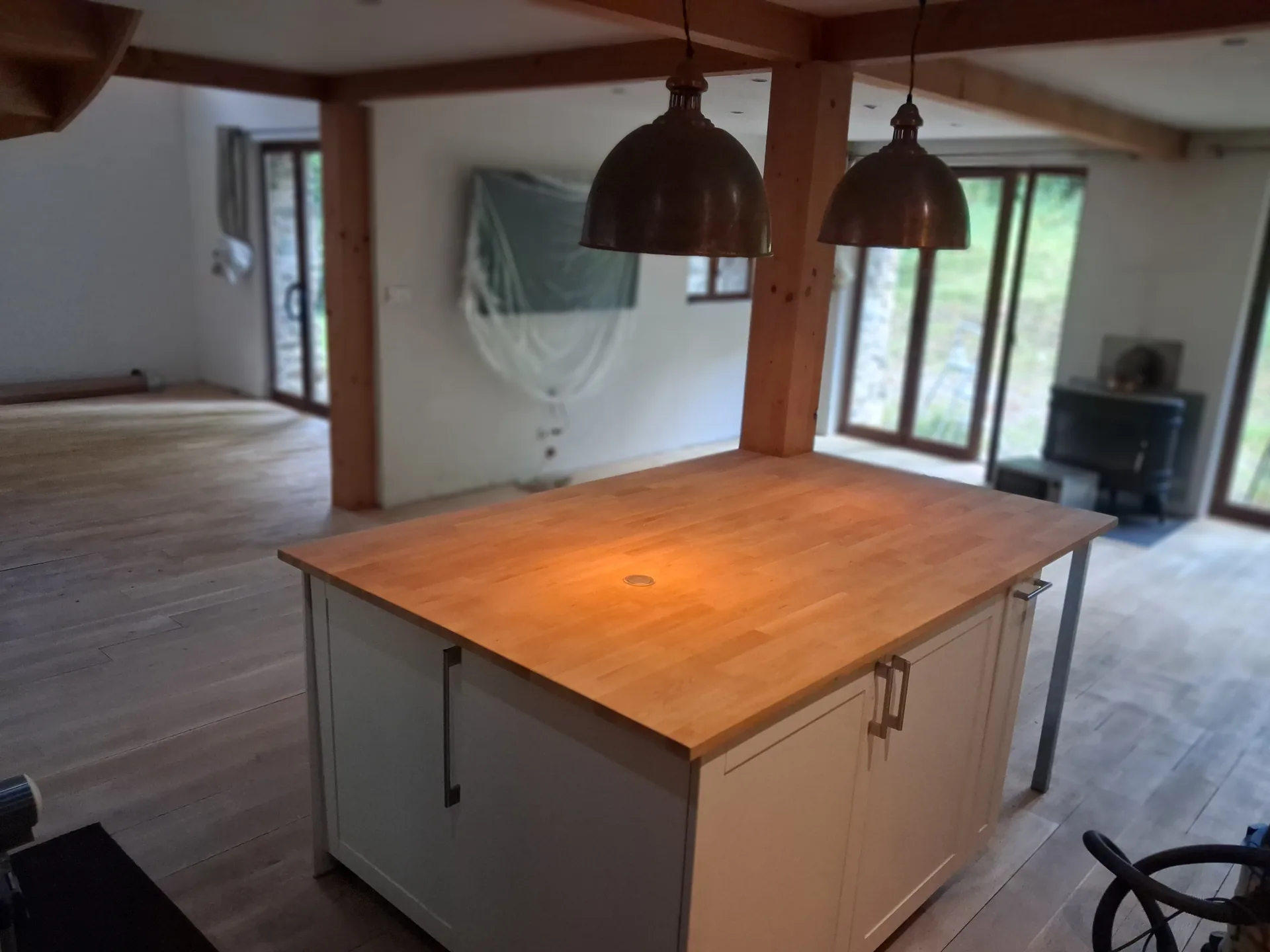
A bespoke floor restoration, room by room
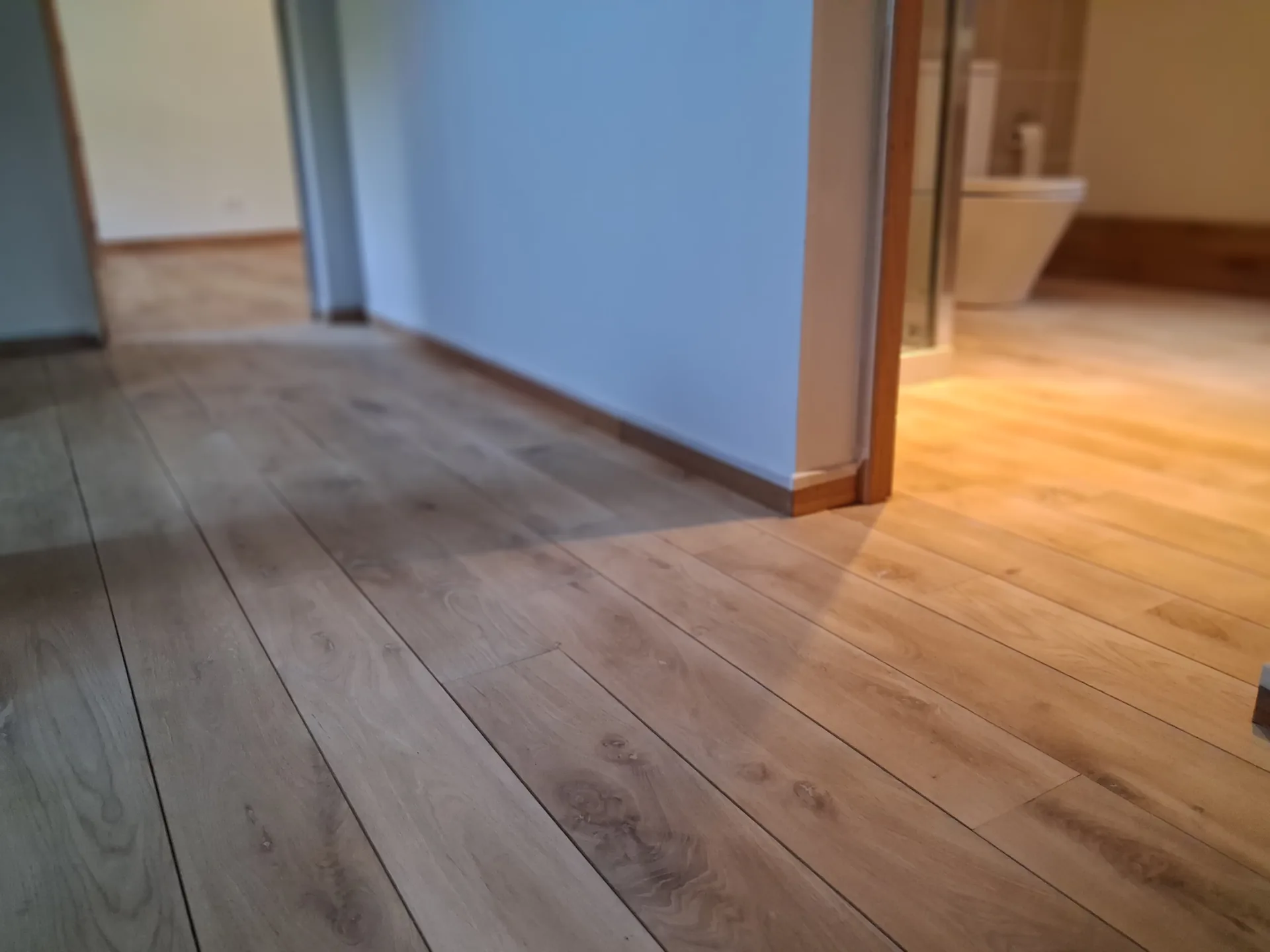
The project at a glance
- The challenge
- An original laying fault that cannot be fully erased
- The area
- Around 100 m² of solid oak, the whole upper floor of the barn
- The approach
- Treating it room by room rather than ripping everything out
- The finish
- Anti-tannin sealer and two coats of matt floor varnish
A laying fault that goes back a long way
Upstairs in this barn in Campan, the oak floor had been nailed onto panels. It is a pairing that cannot work: oak is a hardwood, chipboard a soft substrate, and the nails never had anything to bite into. The floor moves, it sings, and that fault does not go away. Faced with this, I usually hear two answers: miss the fault altogether, or rip the lot out and lay new. Over a hundred square metres of solid oak that only needs sanding, that is neither the same budget nor the same job.
A different answer in every room
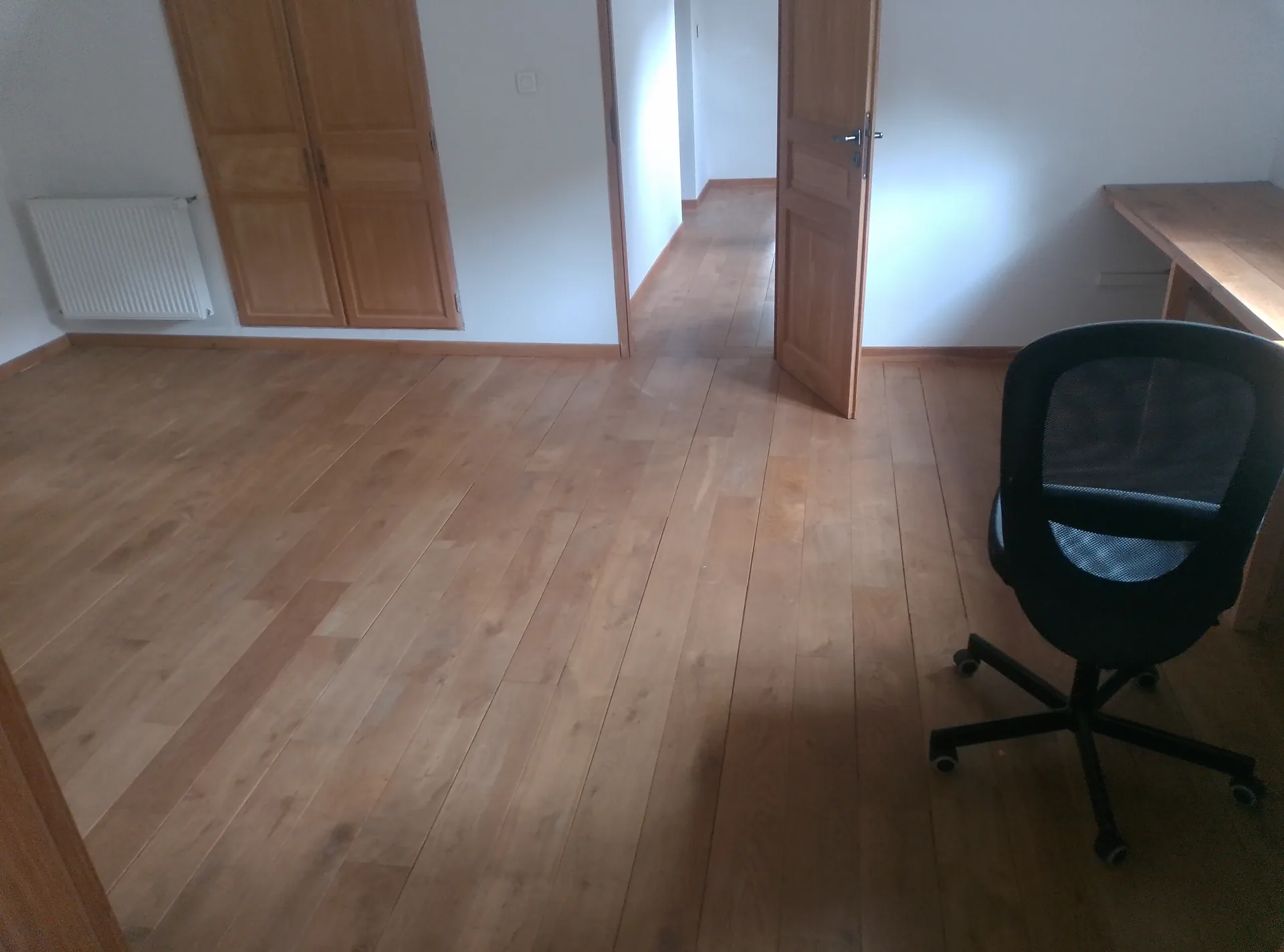
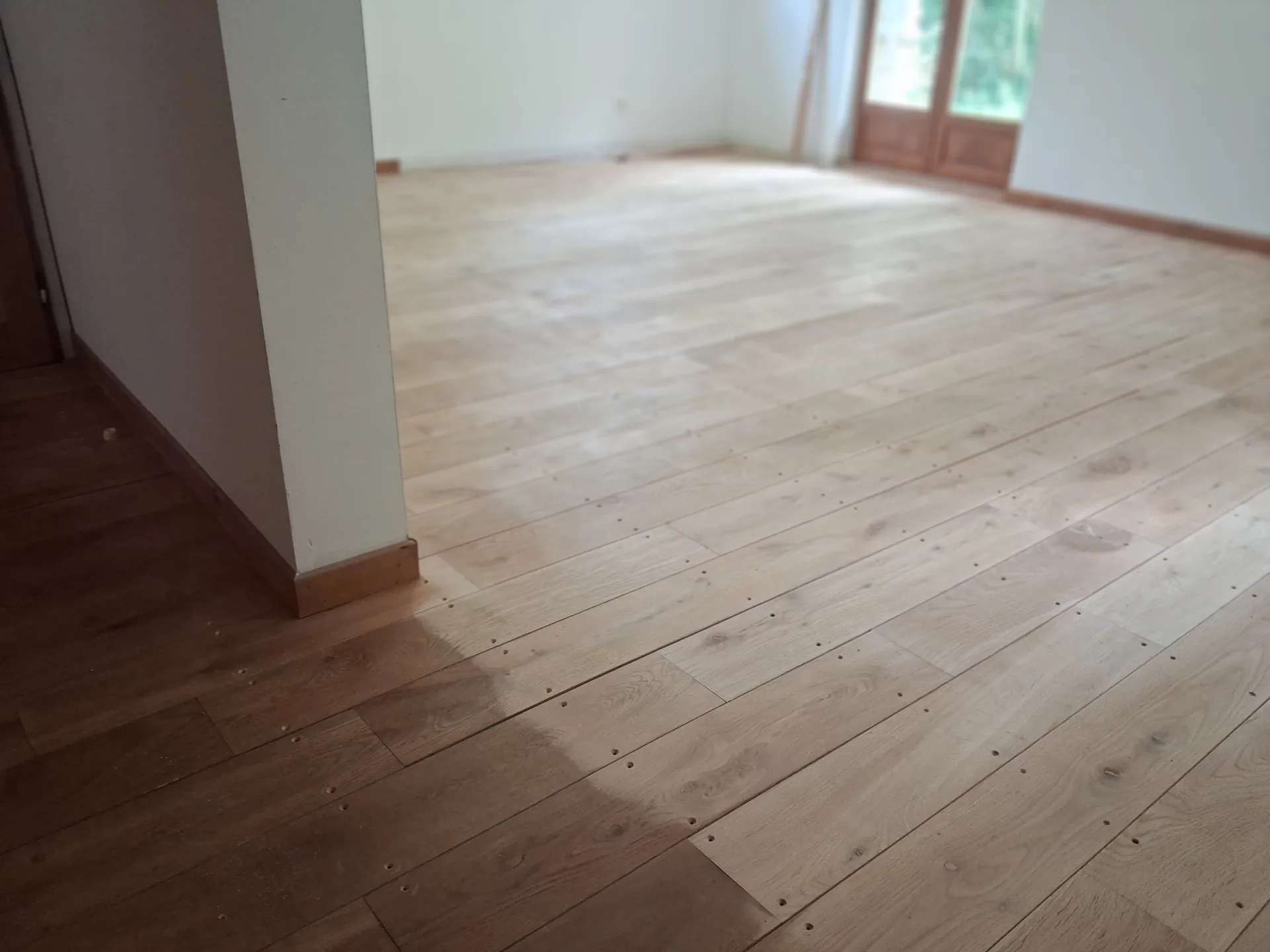
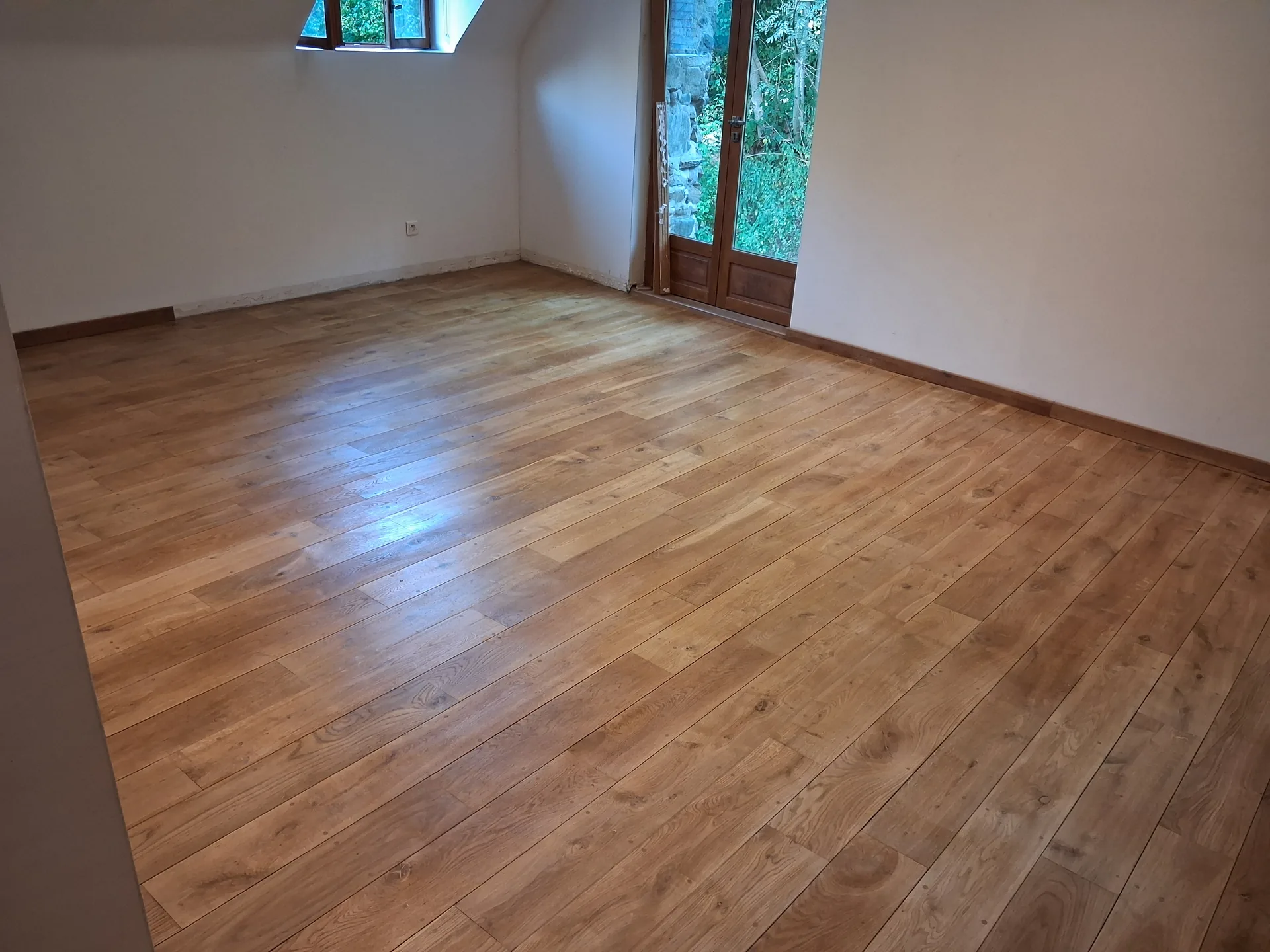
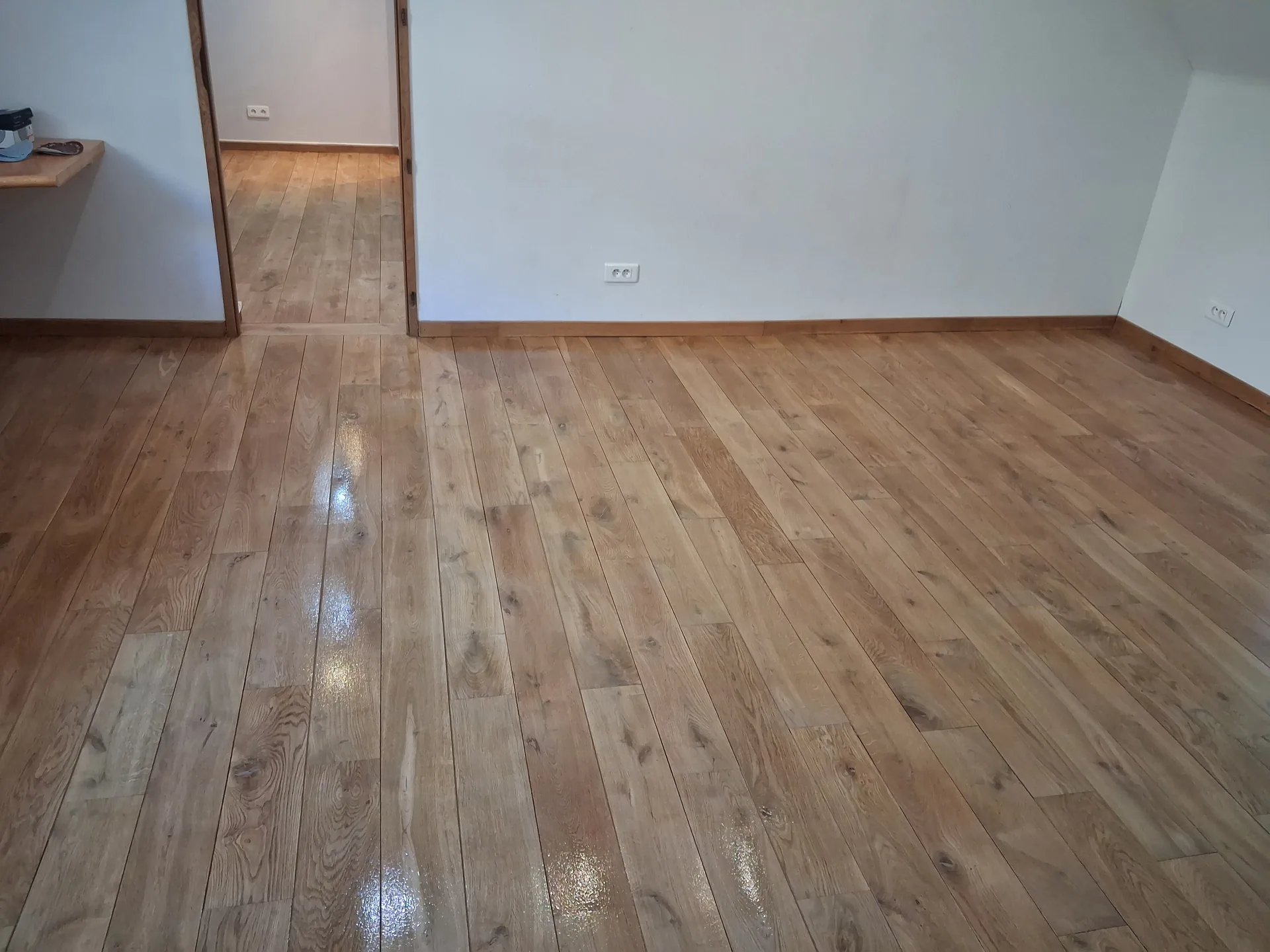
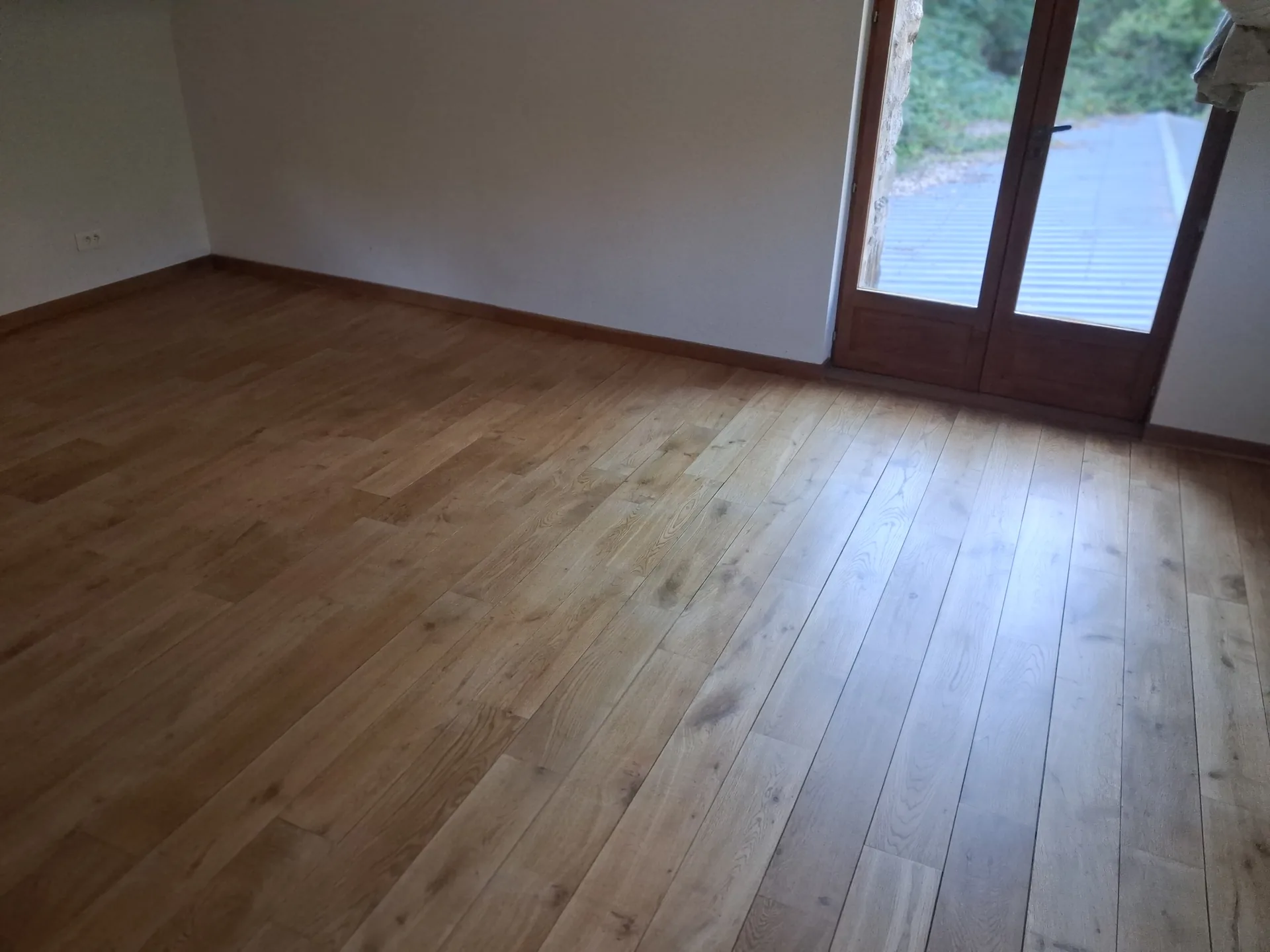
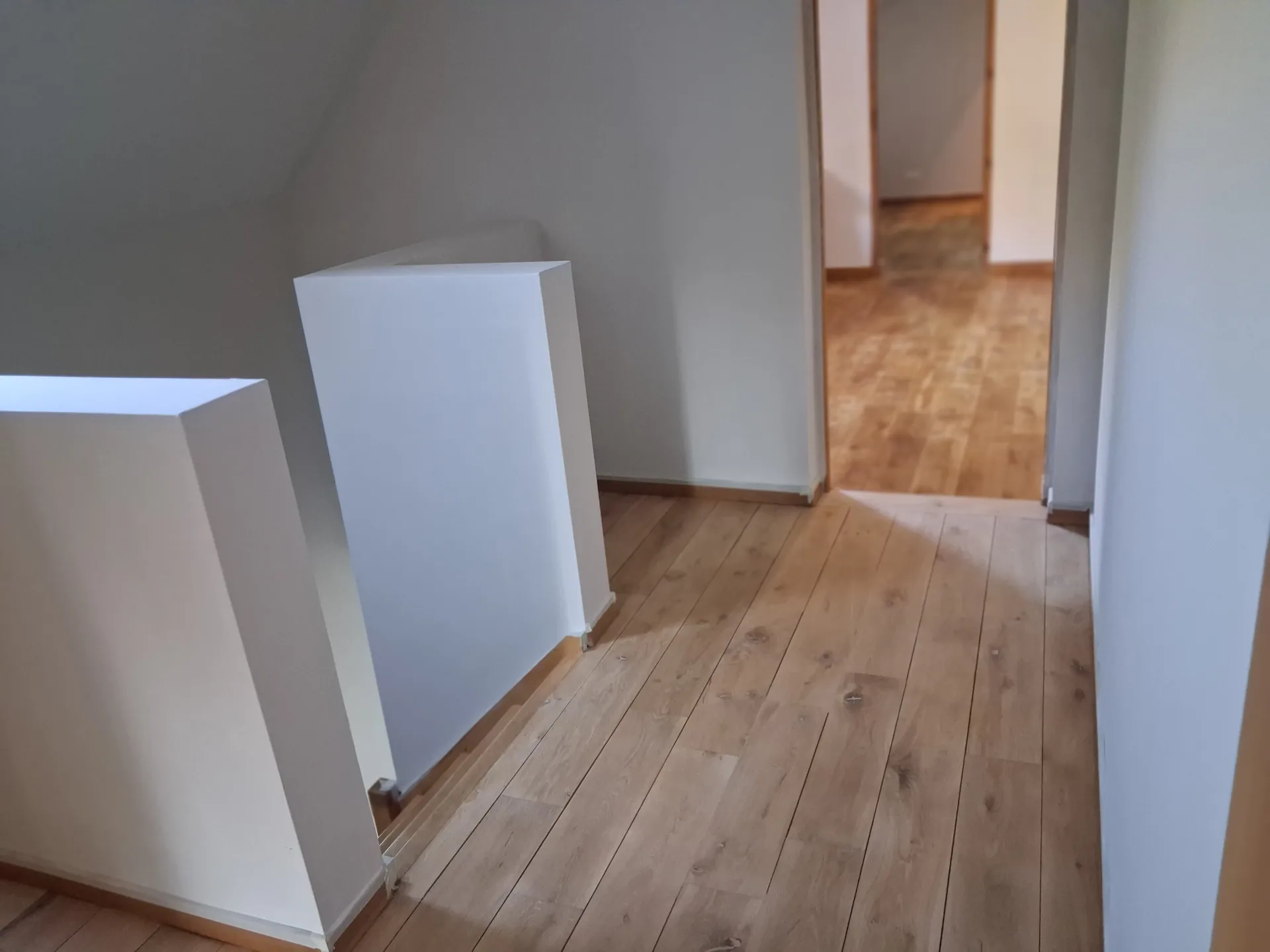
So we looked at the floor room by room, and each time I explained what could be saved, at what price and with what result. Every room was sanded back and restored. What changes from one room to the next is how the substrate was dealt with: in the bedroom, the worst affected, every board was re-screwed from above, then each screw head filled to the right shade, between the sealer and the varnish. Elsewhere, the owners preferred to stick to the restoration itself, knowing exactly what that meant. In the bathrooms, the timber close to the shower and the bath was planed back and repaired where the old protection had failed.
Chamfered boards, and a job run as a pair
One difficulty belongs to this floor alone: the boards are , unlike the ground floor. There is no filling those grooves: each repair had to be judged board by board to keep the whole thing consistent to the eye. Then comes the finish, the same everywhere: sanding back to bare wood, an anti-tannin , then two coats of matt floor varnish. The job was run as a pair with Florent Balzac (FB Agencement), a partner joiner. And so the couple could move into a house that was properly finished, most of the walls were given a coat of paint before handover.
One last thing, because it matters: the original fault has been reduced, not removed. Some areas still sing a little. That was said before we started, and decided together. I would rather say so plainly than promise a result I cannot deliver.
These clients trusted me with the whole barn, from the ground floor to the upper floor. Their review is on the page about the ground floor:
See this client's review See all my reviewsThe questions I often get asked
How do you tell whether an old floor can be saved or should be lifted? Can each room of the same floor be treated differently? Can a floor nailed onto a poor substrate ever go quiet again? And does it all have to be done at once, or can it be spread over time?
I have practical answers to all of that, and two articles to dig further: restoring an old wood floor and why a wood floor creaks. For your own case, give me a call: the quote is free. I speak English, so feel free to call or write in English.
Been told your floor is beyond saving?
Before lifting the lot, have it looked at. Tell me what you have underfoot: the species, the age, what bothers you. I will tell you honestly what can be saved and what cannot, and give you a clear price. I speak English, so feel free to call or write in English.
More of the same project
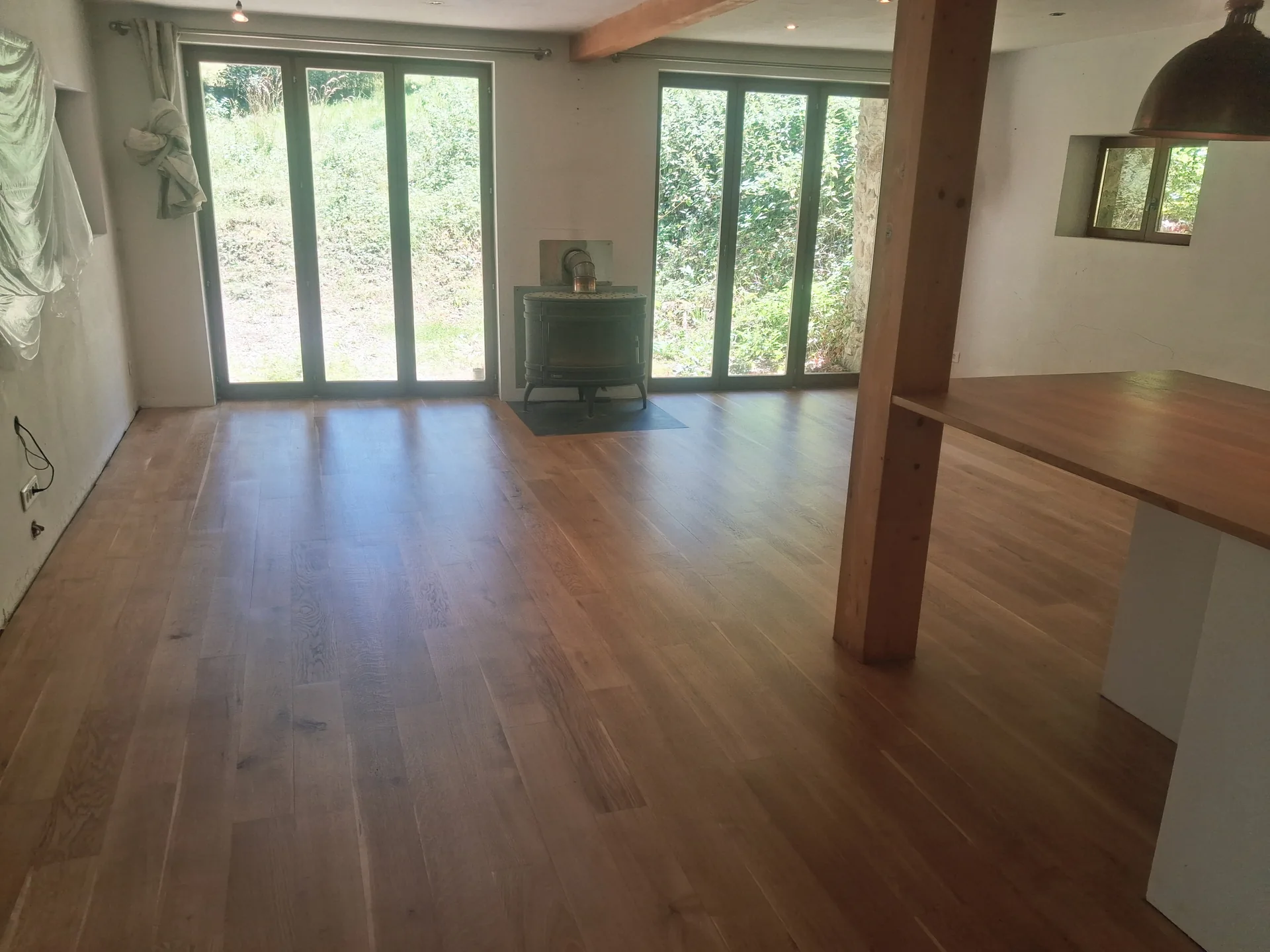
The oak floor of a Campan barn, set free then brought back to new