
An old solid wood floor restored
The project at a glance
- The challenge
- A solid wood floor dulled by the years
- The timber
- The original floor, kept
- The finish
- Lacquer seal after sanding back to bare wood
- The result
- A floor like new, with nothing replaced
Why restore rather than replace
This living room had a beautiful solid wood floor, but years of foot traffic had dulled it: scratches, stains, the finish worn through to bare wood in places. Many people's reflex is to lay a new floor on top. A shame: a solid wood floor can be sanded and restored several times in its life.
Restoring costs less than replacing, and above all you keep the original wood, its patina and its character. No new floor tells the same story.
The work: sand, repair, protect
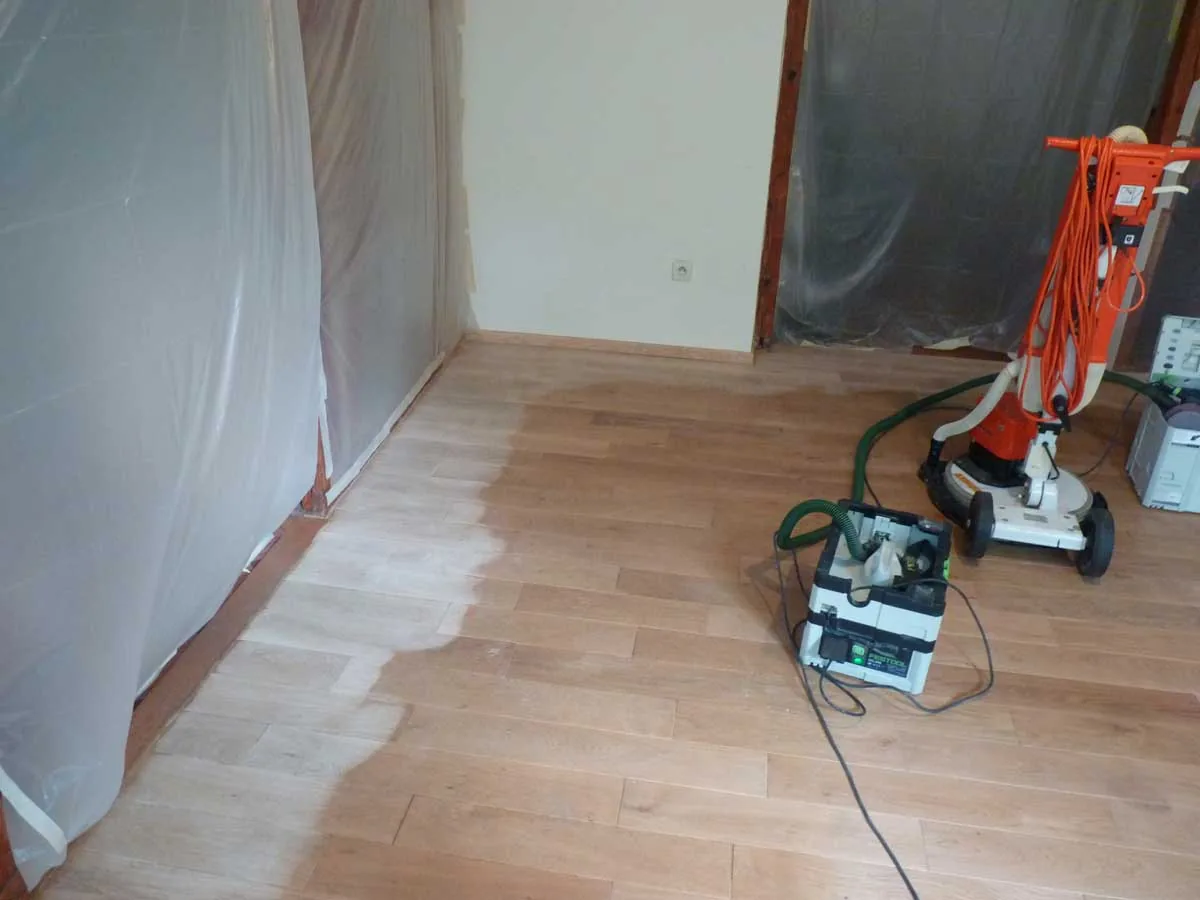
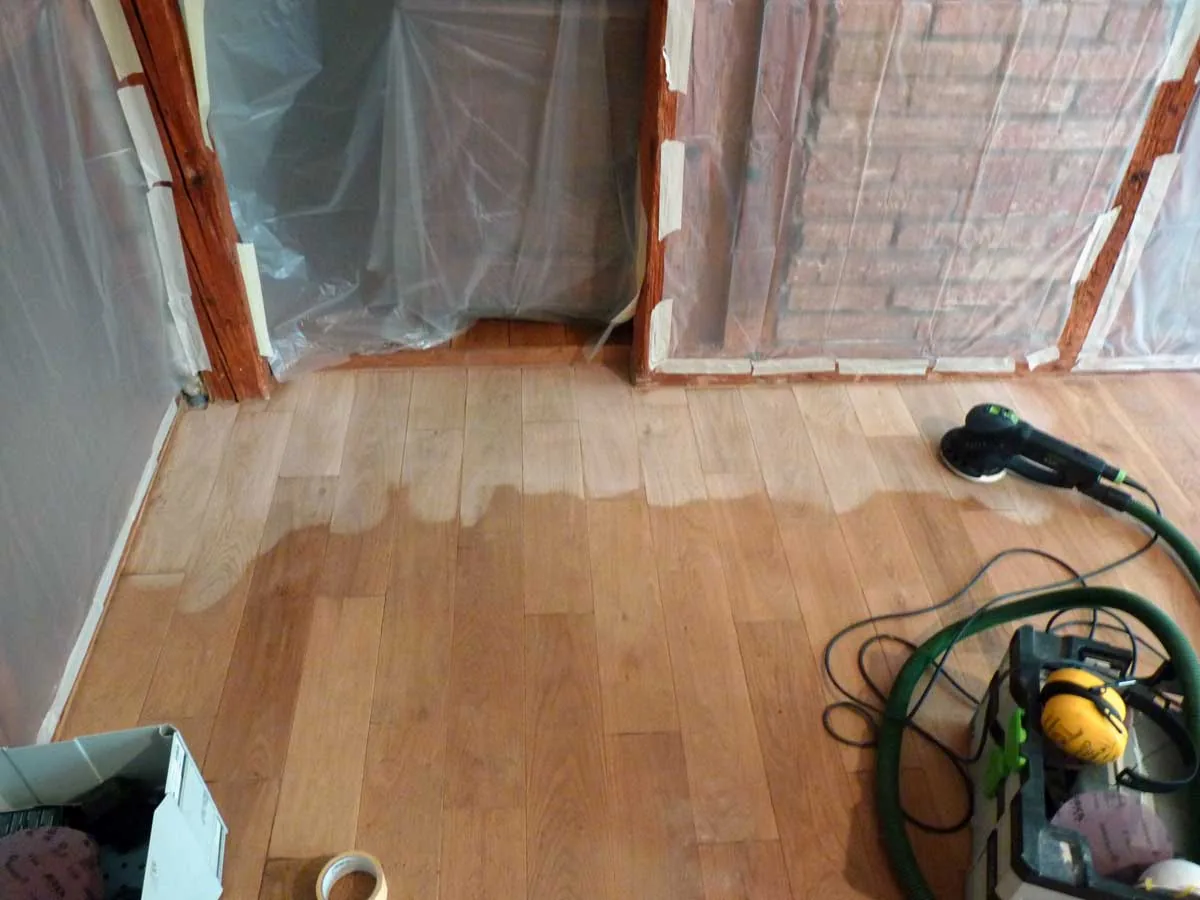
The first step is to : several passes with the sander, from coarse to fine grit, to remove the old finish and get back to bare timber. That is when the floor reveals its true colour, often far lighter than you imagined.
Then I repair whatever needs it: damaged boards, gaps, small holes. Then comes the protection: a in several coats, which protects the wood from daily use for many years to come, while leaving its grain visible.
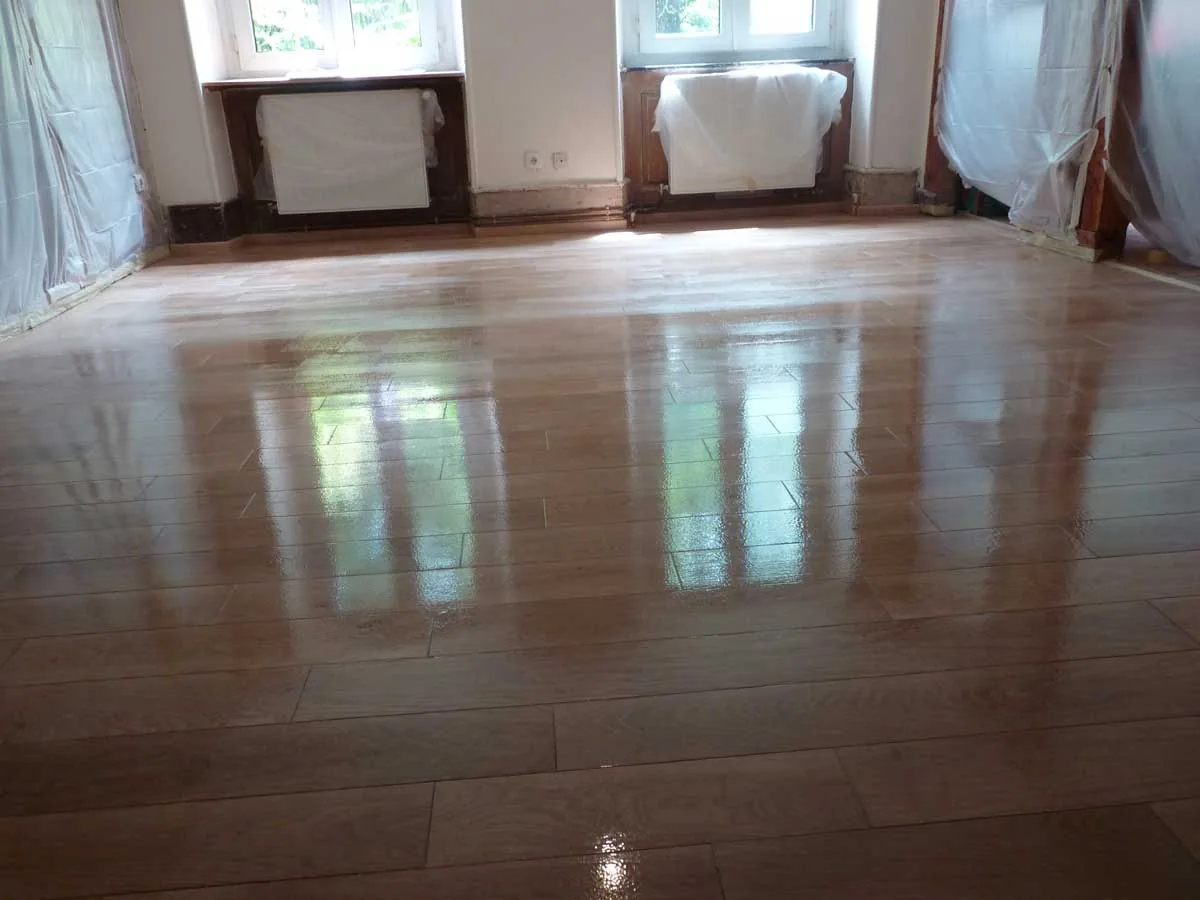
The result speaks for itself: the same floor, just as it was on day one.
My clients' reviews, project after project, are there to read on my Google profile:
See all my reviews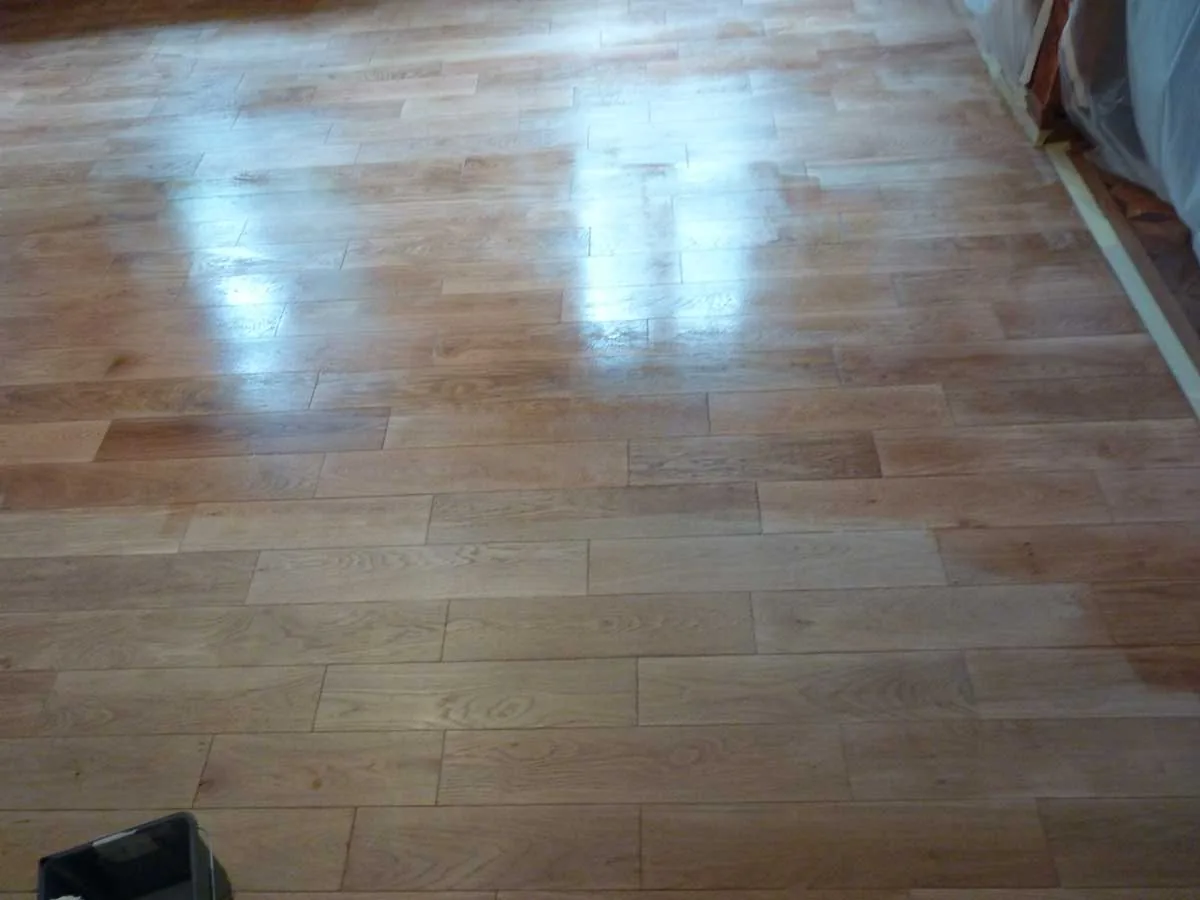
Has your wood floor seen better days?
Before burying it under a new floor, have it looked at. More often than not it can be saved, and the result is surprising. I come and see, and I tell you honestly what is possible. I speak English, so feel free to call or write in English.
More projects
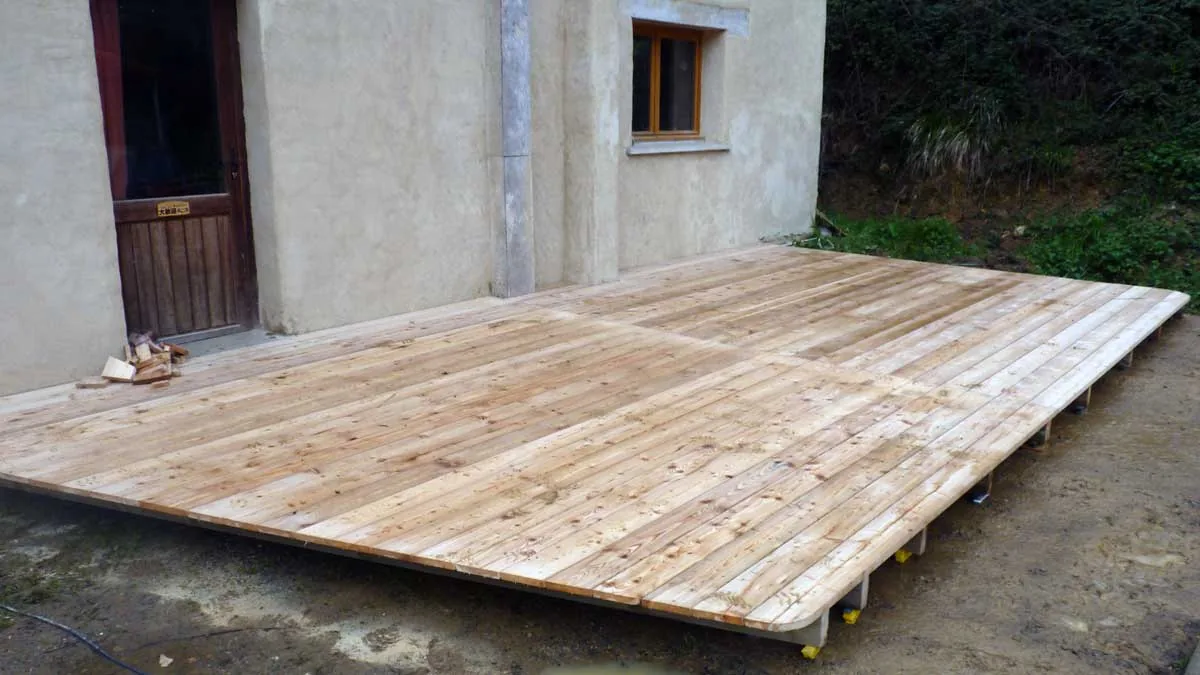
A larch deck facing the Pyrenees
