
Solid wood, engineered or laminate flooring: which to choose?
Three words that look alike in the shop, three floors that have almost nothing in common. One can be renovated for a century, another gets thrown away after fifteen years. Here is how to really tell them apart.
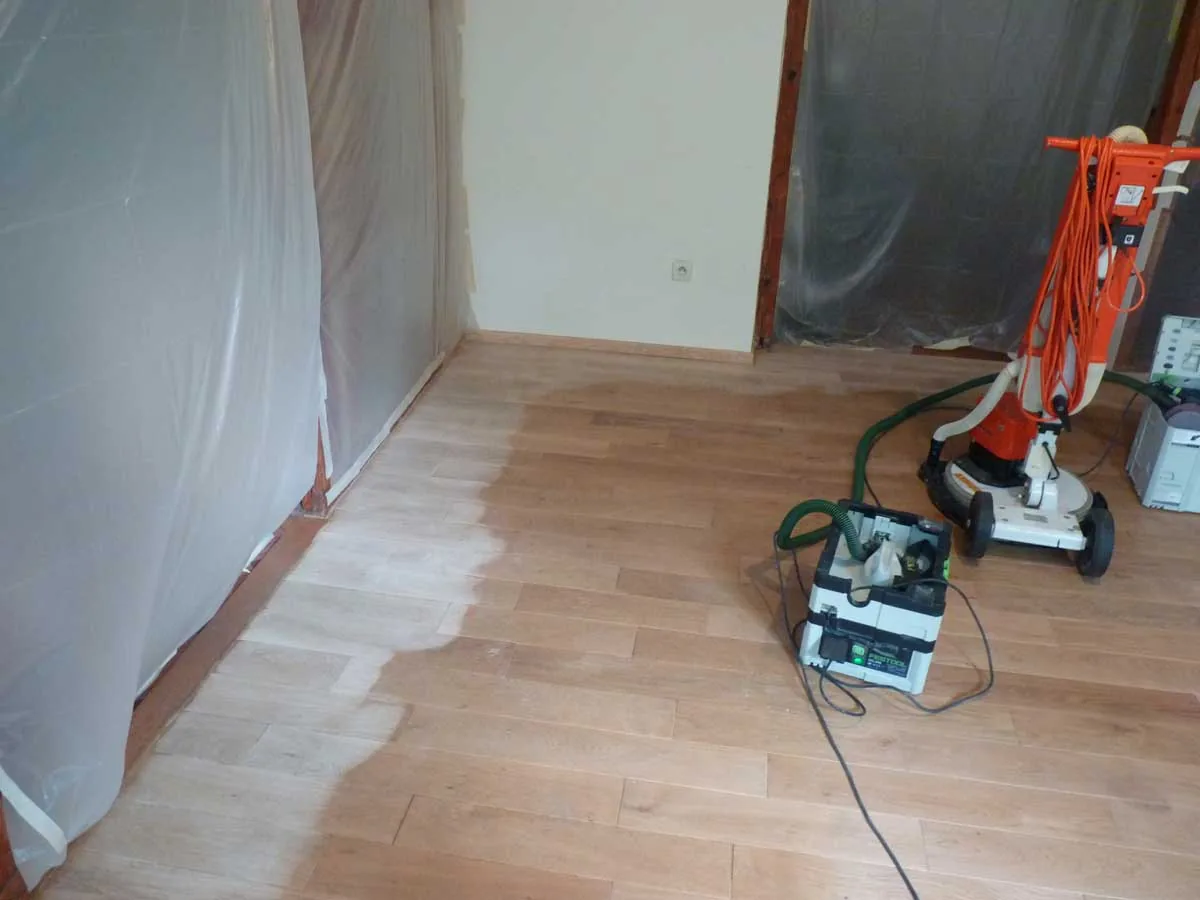
I get the question on almost every visit: "solid, engineered, laminate, what is the difference, apart from the price?" The answer fits in one sentence. Solid wood and engineered wood are wood, laminate is not. Everything else follows from that: the lifespan, whether it can be renovated, the feel underfoot, and the value the floor adds to your house.
Three very different constructions
Solid wood flooring is a board cut from a single piece of timber, often 14 to 23 mm thick. Engineered wood puts a layer of real wood, called the , on top of a board or plywood core. Laminate, for its part, is a photograph of wood printed on a fibreboard panel and protected by a resin. It is a decent floor covering, but it is not a wood floor: the standard reserves the French word parquet for floors whose real wood layer is at least 2.5 mm thick.
| Floor | What it is | Lifespan | Price supplied and fitted |
|---|---|---|---|
| Solid wood | 100% real wood | 50 to 100 years and more, can be sanded many times | €90 to €210 per m² |
| Engineered | 2.5 to 6 mm of real wood on a core | 30 to 50 years, 1 to 3 sandings depending on the wear layer | €60 to €160 per m² |
| Laminate | Printed decor on fibreboard | 10 to 20 years, cannot be renovated | €35 to €100 per m² |
The real question: can your floor be renovated?
This is the point product sheets carefully avoid. A professional sanding removes roughly 0.5 to 1 mm of wood. A 20 mm solid floor can therefore be brought back to new many times: I regularly renovate 80 or 100 year old floors in the valleys, like this old wood floor sanded back to bare wood near Bagnères-de-Bigorre. An engineered floor with a 2.5 mm wear layer will take one or two sandings, and then it is over. And an entry-level engineered floor with a very thin layer, like a laminate, will never be renovated: the first serious wear is final.
Engineered wood still has real strengths. It is more stable than solid wood when humidity varies, which matters here where the air is dry in winter with the heating on and damp the rest of the year. It is also compatible with underfloor heating and can be laid as a , which trims the budget. For many projects, an engineered floor with a thick wear layer is the best compromise.
So what about laminate?
I am not going to trash it: it is affordable, it stands up well to everyday scratches, and some recent decors are impressive at first glance. For a rental studio or a child's bedroom, it holds its own. But you should buy it knowing three things. It cannot be repaired: a damaged board gets replaced, and the exact decor may no longer be made in five years' time. It sounds hollow underfoot if the installation is done carelessly. And it adds nothing to the value of the property: an estate agent writes "parquet" in a listing, never "laminate".
My honest opinion: for the same budget, I almost always recommend a simple engineered floor rather than a top-of-the-range laminate. The prices cross over at around €50 to €60 per m² fitted, and on one side you have real wood that improves with age, on the other a photo of wood that will only wear out. Laminate is only the right choice when the budget is really tight or the floor is temporary.
What I look at before advising you
- The room: a busy living room is not treated like a guest bedroom.
- The existing subfloor: tiles, old floorboards, concrete slab, underfloor heating.
- The product's actual wear layer, not the total thickness of the board.
- The factory or workshop finish: sealed, oiled, brushed.
- Your time horizon: you do not buy the same floor for 10 years as for 40.
The gold-underlined words are explained on hover. All definitions are in the joinery glossary.
To see how I work on floors, have a look at my wood flooring: installation and renovation page. And if your question is about an existing floor rather than a purchase, read my advice article on renovating an old wood floor.
Three questions that come up often
Is engineered wood flooring a real wood floor?
Yes, provided its layer of real wood is at least 2.5 mm thick: that is the threshold set by the European standard. Below that, and this is the case for laminate, which has no real wood layer at all, you are not allowed to call it a wood floor.
How long does a laminate floor last?
Expect 10 to 20 years depending on quality and traffic. Once the decorative layer is worn or scratched, it can be neither sanded nor repaired: the boards get replaced. It is a floor you change, not a floor you renovate.
Can you lay a wood floor over existing tiles?
Yes, it is actually a common case in renovation. Engineered boards laid floating over an underlay work very well on flat tiles. You just have to check the clearance under the doors and how flat the subfloor is before starting.