Which wood species for a piece of furniture?
Oak, walnut, beech, ash, sweet chestnut: every wood has a character, a price and uses where it excels. Here is how I guide my clients when we choose the material for their furniture.
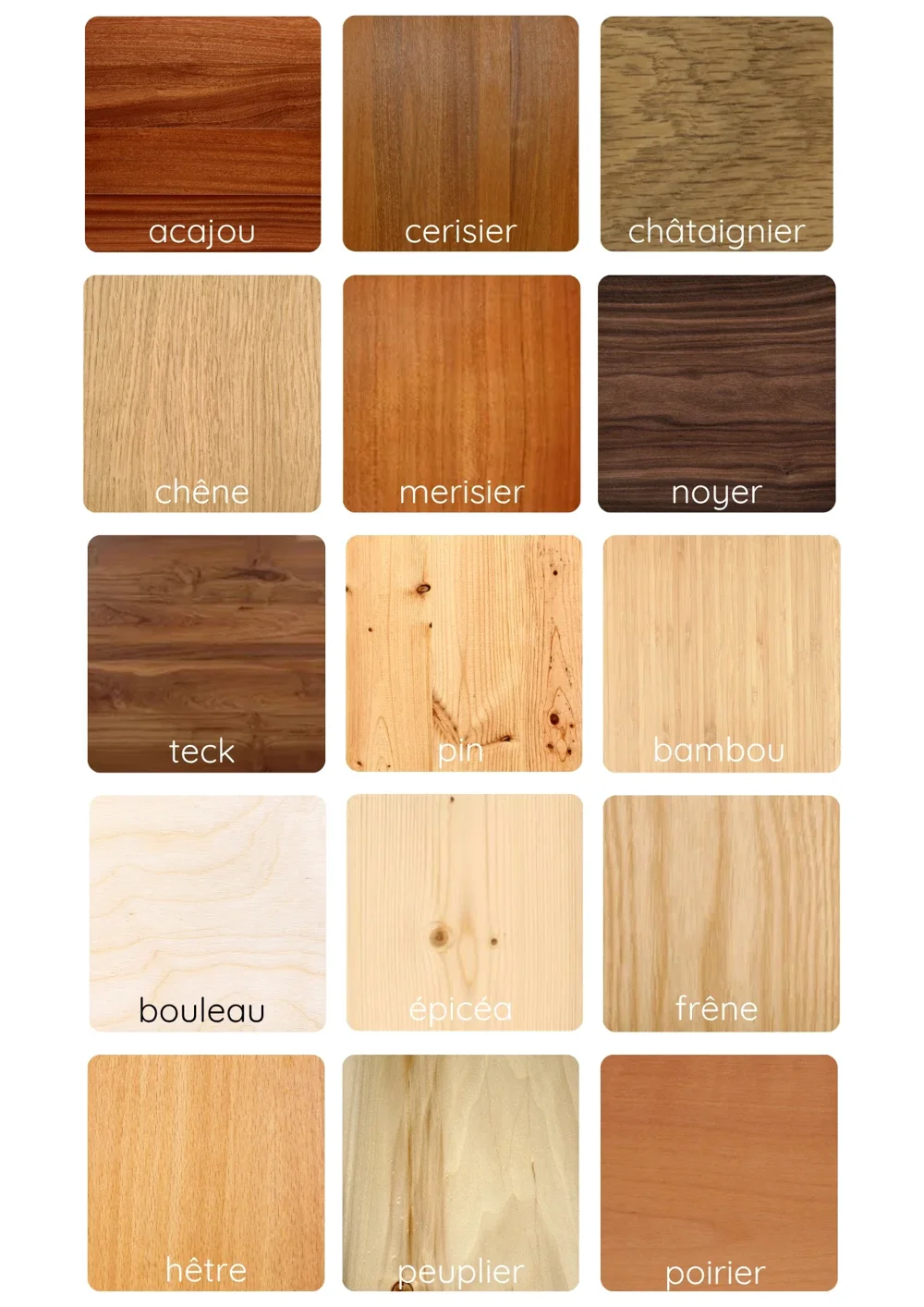
When a client commissions a piece of furniture, the first real decision is not the shape: it is the species, the essence as you will see it written on a French quote. It determines the colour, the feel, the resistance to knocks, and a good share of the price. Online, you are told that 'oak is noble' and 'beech is economical'. True, but it does not help you choose. So here is how I present the five species I work with most, with their real prices per board.
The five species compared
| Species | Character | Hardness | Board price | Uses where it excels |
|---|---|---|---|---|
| Oak | Golden brown, pronounced grain, ages superbly | Hard | €1,700 to €2,400 per m³ | Tables, staircases, bookcases, everything that has to last |
| Walnut | Chocolate brown with purplish highlights, the most precious | Medium-hard | €3,000 to €4,000 per m³ | Fine furniture, table tops, one-off pieces |
| Beech | Light pinkish, fine even grain | Medium-hard to hard | €900 to €1,400 per m³ | Painted or stained furniture, interiors, bases and legs |
| Ash | Blond, lively figure, very elastic | Medium-hard | €1,100 to €1,600 per m³ | Worktops, chairs, light Scandinavian-style interiors |
| Sweet chestnut | Close to oak but lighter and more rustic | Softer | €1,400 to €1,900 per m³ | Furniture with character, old houses, controlled budgets |
The gold-underlined words are explained on hover. All definitions are in the joinery glossary.
Oak and walnut: the safe bets, each in its place
Oak is the wood that forgives everything: hard, stable once properly dried, and it takes on a patina instead of ageing. For a family table that will take knocks for thirty years, oak it is. Its just calls for a few precautions at the finishing stage, and that is my business.
Walnut is something else: you do not choose it for sturdiness but for beauty. No French wood has that depth. I built a changing table in whose figure makes the whole piece: you can see it in my portfolio. The material price is high, but on a small piece the difference stays reasonable.
Beech, ash, sweet chestnut: the smart money
Beech is the most widespread tree in our forests, and our Pyrenean valleys are full of it. The result: it is the cheapest species in the table, with a fine grain perfect for stained or painted furniture. Its flaw, and you need to know it: it is a nervous wood that moves a lot with humidity.
In fact, I will be direct: a large solid beech table top in a house heated by a wood stove is something I advise against. It is the wood that reacts most to swings in humidity, and the dry winter air ends up pulling it out of shape, sometimes splitting it. For a table top, I steer people towards oak or ash; beech I keep for bases, carcasses and painted furniture, where it is excellent and brings the quote down.
Ash deserves more success than it gets: blond, lively, highly resistant to knocks thanks to its elasticity (it is the wood of tool handles). For a light look without paying oak prices, it is my first choice. Sweet chestnut, finally, is oak's rustic cousin: the same warm tone, tannin that protects it naturally from insects, but lighter and a little cheaper. In an old house in the valley, it is right at home.
What the species really changes on the quote
It is the question everyone asks and few websites dare to put figures on: switching from beech to walnut changes what, exactly, on the bill? Less than the ratio of prices per m³ suggests. On a bespoke piece, the material represents roughly a quarter to a third of the quote; the rest is design, workshop hours and fitting, which do not change with the species. Concretely: a €3,000 piece in beech does not drop to €1,500, and the same piece in walnut does not double. The gap plays out in hundreds of euros rather than thousands. That is why I always price two species when a client hesitates: we talk about real figures, not impressions.
To see what I build, have a look at my bespoke furniture page. And if you are wondering why a solid wood piece moves with the seasons, I explain it all in why wood moves.
Three questions that come up often
Why is walnut so much more expensive than beech?
Because it is rare. Walnut grows slowly, often in isolation, and the finest boards are fought over. Beech, on the other hand, is the most widespread tree in our forests. The price of the material reflects rarity first, not quality: a well-made beech piece will last as long as a walnut one.
Can two species be mixed on the same piece of furniture?
Yes, and it is often a good idea. An oak carcass with ash drawers, or a walnut top on a stained beech base: you put the budget where the eye lands. The two woods just need compatible behaviour, and checking that is my job.
Do you work with wood from the Pyrenees?
When possible, yes. Beech and ash are abundant in the Pyrenean forests, and I buy first from the region's sawmills. For walnut or certain cabinetmaking-grade oaks, I sometimes have to look further afield, but always in France.